AI Trade Gets Its Stress Test: Goldman Slashes Kospi Target 25% as Warsh's Fed Week Begins
Quick Hits
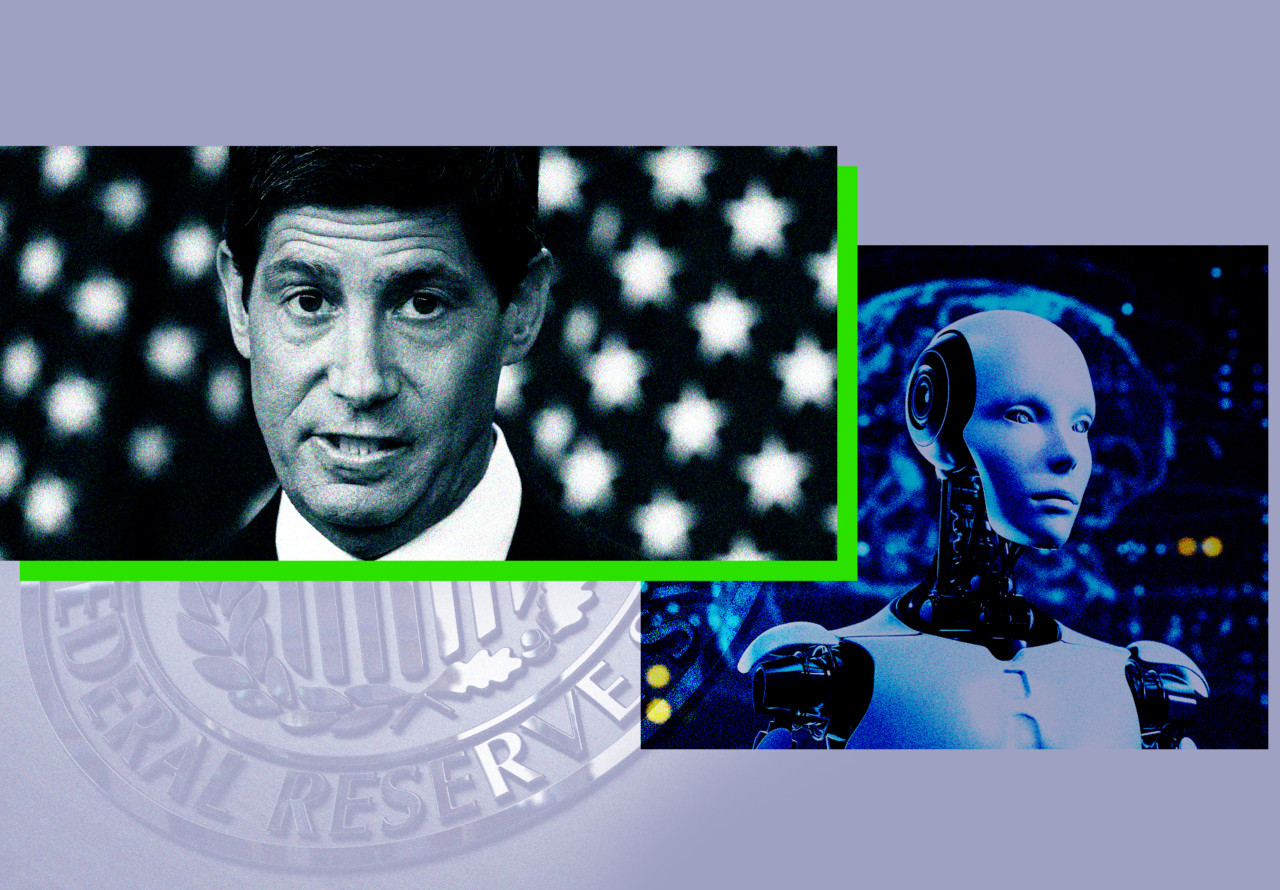
- Fed week, new chair, awkward timing. A new source of inflation has Fed Chair Kevin Warsh's FOMC "between a rock and a hard place" (Motley Fool) — but MarketWatch argues that mounting trouble in AI debt markets, where financing has become harder and more expensive as the capex boom draws scrutiny, could hand Warsh cover for the fewer rate hikes he wants.
- The AI trade is flashing warnings across the Street. Goldman's Tim Moe cut his Kospi target — a market he treats as a leading indicator for the global AI trade — by 25%; Morgan Stanley says support for semiconductor stocks could sit as much as 15% below current levels; UBS says AI stocks may finally have to play by normal valuation rules with rates higher.
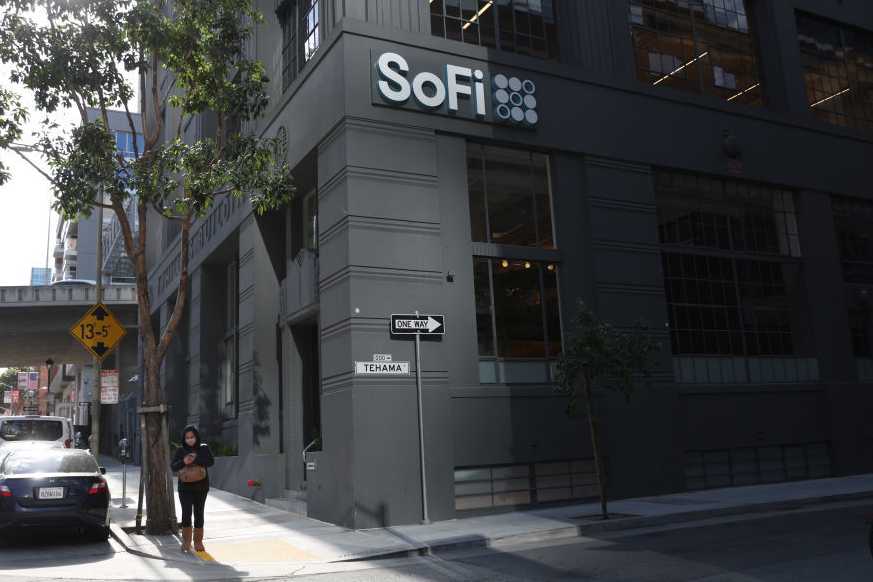
- Earnings bright spots: SoFi and Verizon. SoFi (SOFI) beat on a lending surge and impressed with early-2027 guidance; Verizon's (VZ) subscriber growth ran at more than double analyst expectations on a key measure.
- Rotation check: Dividend stocks are having an excellent October as tech struggles, per MarketWatch — and Coca-Cola (KO) just printed a fresh all-time high.
- Anthropic is moving toward a supersized IPO, publicly filing its prospectus.
Markets Overview
- The headline indexes offer little drama — UBS notes the S&P 500 has barely moved since June, and says options traders are increasingly "seizing control" of the index, a structural calm worth respecting.
- The bigger picture remains firmly positive: the S&P 500 is up roughly 12% year to date as of Oct. 22 (Motley Fool), capping another strong year powered largely by the AI infrastructure build-out.
- Beneath the surface, caution is building. Morgan Stanley's chief stock-market strategist is sticking with an 8,000 year-end S&P 500 target but flags growing unease on semis. Goldman's 25% Kospi cut reflects both a lower growth multiple investors will pay for AI names and rising volatility.
- Yardeni Research pushes back constructively: four potential shocks — including a surprise Fed rate decision and tightening constraints on the AI trade — could open unexpected buying windows rather than inflict lasting damage.
Earnings Reports
- SoFi (SOFI): Beat driven by a lending surge; its early-2027 forecast is impressing Wall Street, and shares climbed.
- Verizon (VZ): Stock rose after a subscriber surge came in at more than double expectations on a key growth measure.
- HCA Healthcare (HCA): Beat on the top and bottom lines and expects full-year performance in the upper half of its guidance range.
- Cadence Design Systems (CDNS): On its Monday call, raised full-year revenue guidance to 21% growth alongside record backlog.
- SunCoke Energy (SXC): GAAP EPS of $0.25 beat by $0.13; revenue of $485.9M beat by $27.65M.
- Misses: Travelzoo (TZOO) posted GAAP EPS of -$0.20, missing by $0.08, on $22.9M revenue (slight miss); Asbury Automotive (ABG) delivered EPS of $6.16, missing by $0.26, with revenue of $4.4B missing by $110M.
- Oracle (ORCL) headlines Wednesday's investor day having lost 60% since its October 2025 analyst meeting, where management targeted $225 billion in revenue — Motley Fool asks whether it's a buy into the event.
Fed & Economic Data
- A highly anticipated Federal Reserve meeting lands this week, and Motley Fool flags Wednesday, Oct. 28 — which also brings Amazon (AMZN) and Microsoft (MSFT) earnings — as the pivotal day.
- The policy bind: Motley Fool says a new inflation source has boxed in Warsh's committee. The counterargument from MarketWatch: if AI-related debt keeps getting harder and more expensive to finance, markets may do some of the Fed's cooling work — strengthening the case for fewer hikes.
- Political pressure is part of the mix: a fresh Trump warning is rattling retirement savers worried about inflation eroding purchasing power (Motley Fool).
Hot Sectors
- Semis/AI hardware — the day's fault line. Morgan Stanley sees support as much as 15% lower. The bull rebuttal, per Motley Fool: Nvidia CEO Jensen Huang sees no signs of memory demand fading through 2029, after Micron (MU) surged 937% since the start of 2025, with SK Hynix and Samsung also rocketing higher this year.
- Dividend and defensive rotation. Dividend-focused ETFs are rallying powerfully in October, adding to big 2026 gains, and Coca-Cola (KO) hit an all-time high. Not everything defensive is working: AT&T (T) is down 16% this year on fears SpaceX's Starlink could disrupt mobile carriers — Fool weighs value trap versus bargain.
- AI valuation discipline returning. UBS's Michel Lerner notes that historically, surges in tech investment and the profitability they produced have proven unsustainable — and with rates higher, AI stocks may have to obey conventional valuation rules again.
Stock News
- Anthropic files its IPO prospectus, positioning itself as potentially the next supersized listing; Motley Fool flags "one astonishing element" in the filing that investors shouldn't ignore.
- Apple (AAPL) is up 28% YTD versus the S&P's 12%, helped by early success of its iPhone Duo folding phone; Fool makes a 2027 outperformance case and pits Apple against Taiwan Semiconductor (TSM) as the better buy.
- Crypto: Bitcoin trades near $81,800 after bottoming at $58,566 in July — a 53% drawdown from its $124,773 all-time high. Cathie Wood's Ark Invest sees 873% upside ahead, per Motley Fool, and BlackRock (BLK) filed with the SEC on Oct. 19 for a new Bitcoin-linked ETF.
- Berkshire post-Buffett: With Warren Buffett retired as CEO since Dec. 31, Motley Fool surveys the unusually high-yielding stocks now sitting in the portfolio.
Market Analysis
- Wednesday is the fulcrum. The Fed's decision, Oracle's investor day, and Amazon/Microsoft earnings all converge around Oct. 28 — a single-session stress test for both the rate path and the AI trade.
- The central tension: an AI complex losing its valuation immunity at the same time its financing is getting more expensive. Goldman's Kospi call offers a real-time barometer; Morgan Stanley's semis floor — up to 15% lower — defines the downside watch zone.
- The calm may be the tell. UBS's options-driven suppression of S&P 500 movement since June cuts both ways: compressed volatility can amplify any surprise, which is precisely the kind of shock Yardeni says could hand patient investors their best entry point of the year.