Chips Crater, SpaceX Soars: The AI Trade Splits in Two as the S&P 500 Slips From Its Record
Quick Hits
- Rough patch after the record. The S&P 500 has slid nearly 2% from its Oct. 6 record close of 7,818.93 — still up about 12% YTD — after the Nasdaq Composite's ~4.5% weekly drop (its worst since June) and an 11%+ plunge in the Philadelphia Semiconductor Index, the worst chip stretch in over a year, as a hot inflation print raised the cost of funding data-center buildouts.
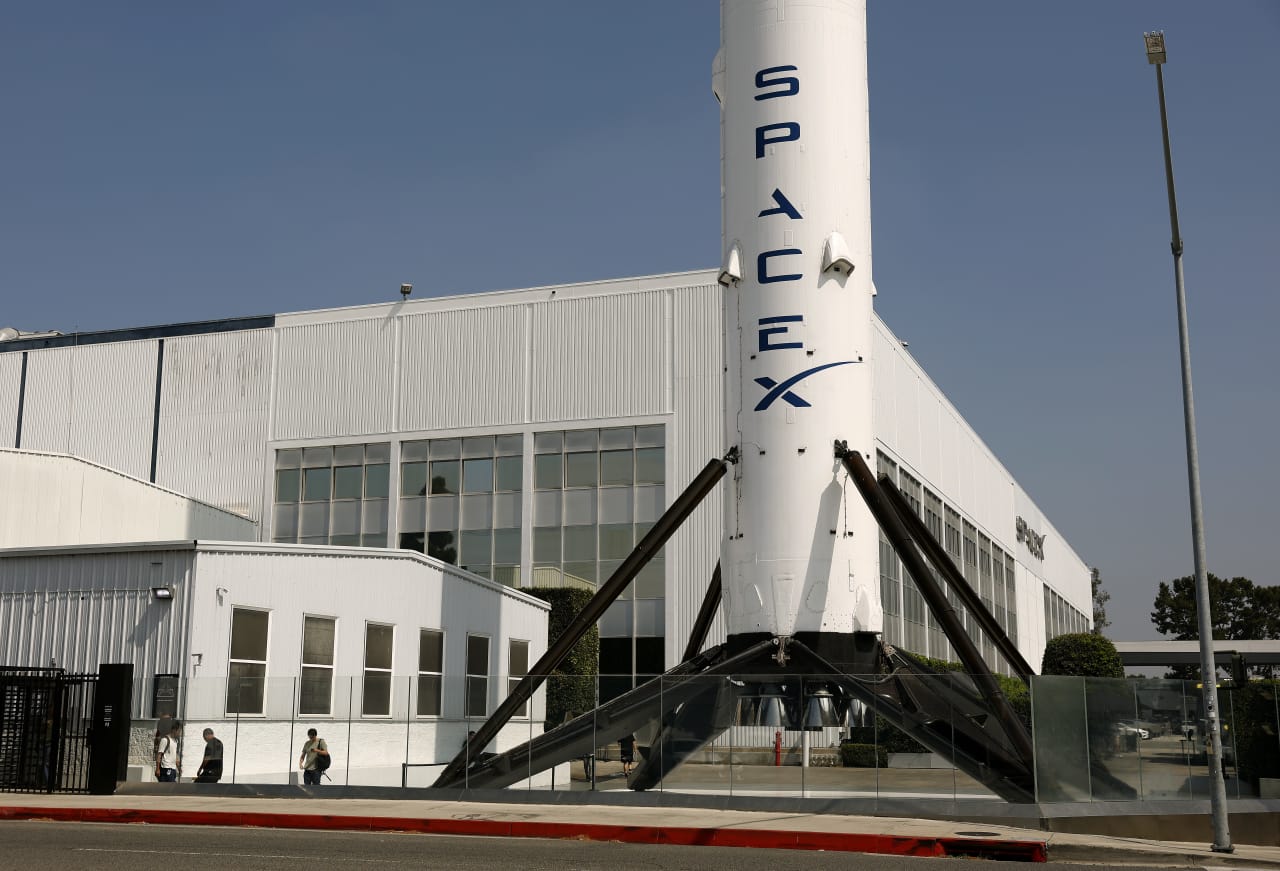
- SpaceX is the AI trade's split personality. The stock is surging on computing-power demand that MarketWatch calls "off the charts," lifting the broader AI universe — even as the Motley Fool predicts up to $180 billion in insider sales will hit the tape following June's record $85.7 billion IPO.
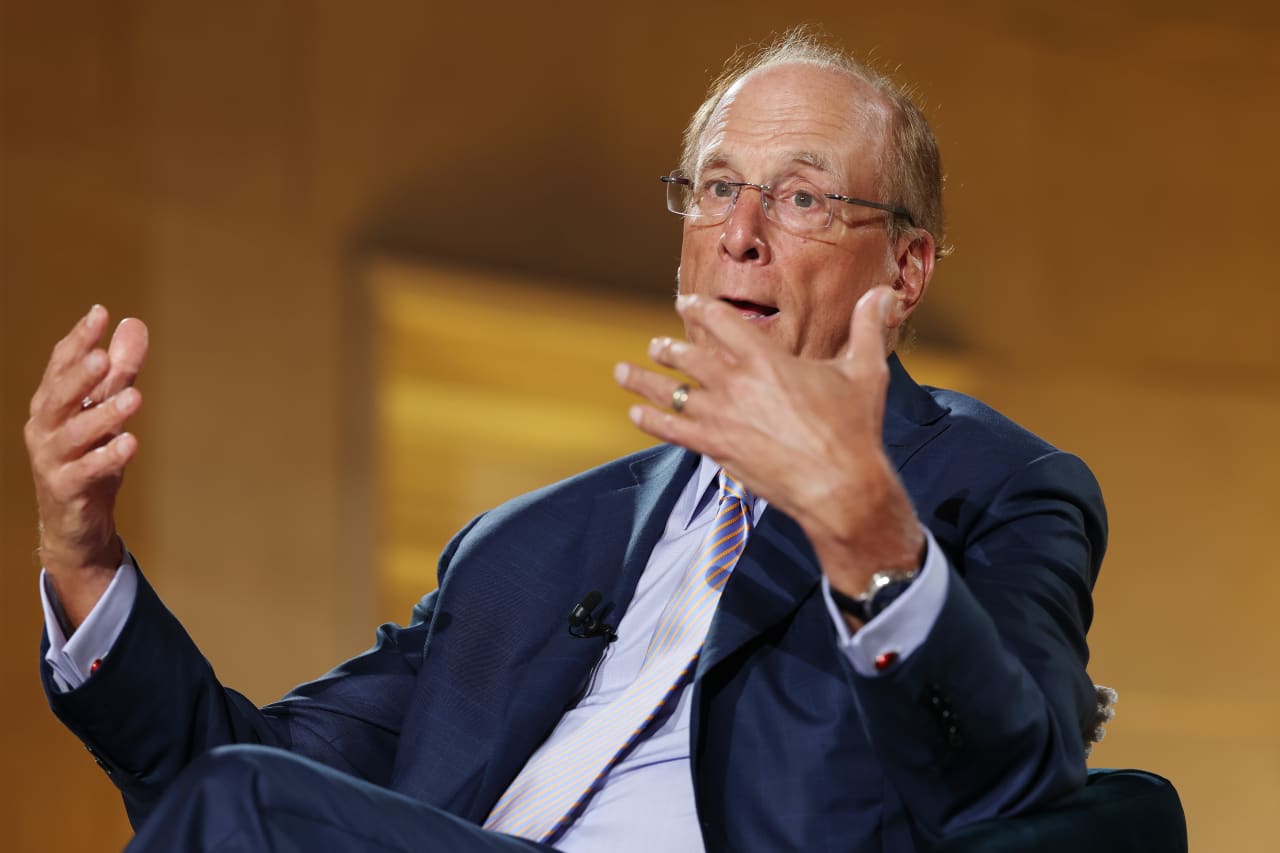
- Fink warns twice. BlackRock's CEO says opposition to data centers will drive up inflation, and separately flags a midterm-election issue he believes could lead to a recession.
- Q3 scoreboard skews mixed. CME Group posted record revenue of $1.74B (beat); Moody's missed on both lines; AT&T's fiber business delivered a large haul of new internet subscribers; Healthcare Services Group beat by $0.13 and raised its 2027 growth outlook.
- AI trade cracks abroad. A South Korean IPO flopped — the latest in a string of disappointments for the global AI trade — even as Taiwan Semiconductor upgraded its forecast on soaring AI demand.
Markets Overview
- The long-run record remains formidable — the Vanguard S&P 500 ETF (VOO) has annualized ~15.3% over the past decade — but the Motley Fool argues the market is doing something for only the second time in 155 years, and that history is "clear" about what comes next.
- MarketWatch, citing the Value Line Median Appreciation Potential's solid forecasting record, says smaller stocks face worse prospects than the S&P 500 over the next four years — a bearish read for the small-cap cohort.
- Midterm math offers a bull counterweight: the S&P 500 was higher one year after all 19 midterm elections since 1950, per the Motley Fool. This year's vote falls on Nov. 3.
- Positioning reads: Cathie Wood's Ark grew its portfolio to $15.4 billion last quarter, with Tesla (TSLA), AMD, and a new SpaceX (SPCX) stake making up ~18% of ARKK assets — a concentrated bet under scrutiny. Meanwhile, Warren Buffett's successor Greg Abel went shopping in tech again at Berkshire Hathaway (BRK.B).
Earnings Reports
- AT&T (T): Fiber was the star of Wednesday's report, powering a large haul of new internet subscribers and letting the carrier shrug off SpaceX fears.
- Moody's (MCO): Non-GAAP EPS of $4.14 missed by $0.11; revenue of $2.02B missed by $60M.
- CME Group (CME): Q3 revenue hit a record $1.74B, beating estimates.
- Stifel Financial (SF): EPS of $1.46 edged past by a penny; revenue of $1.43B missed by $20M.
- Winnebago (WGO): EPS of $0.49 beat by $0.02; revenue of $645.1M missed by $15.15M.
- Old National Bancorp (ONB): EPS of $0.66 in line; revenue of $712.73M missed by $19.28M.
- Healthcare Services Group (HCSG): Q3 EPS beat by $0.13 and management raised its 2027 growth outlook.
- Washington Trust (WASH): Rising net interest income, expanding margins, and improved credit quality were the takeaways from its Oct. 20 call. Neptune (NP) also reported.
Fed & Economic Data
- No FOMC decision today, but inflation dominated the macro chatter: the Fool notes "Trumpflation is evolving" with a new twist that threatens stocks, while Trump's latest warning is "sending shockwaves through Wall Street" — coverage worth reading as political risk, not settled economics.
- Larry Fink argues that blocking data centers is itself inflationary — a notable frame as AI infrastructure becomes a midterm campaign issue he thinks could tip the economy into recession.
- Rate-sensitive names: the Fool highlights two bank stocks expecting faster interest-income growth in 2027, a signal some see as leaning against the rate-cut narrative.
- On the household ledger: Social Security's 2027 COLA is being sized up against history, and a MarketWatch columnist weighs whether paying off a $300,000 mortgage at 2.75% ahead of retirement is discipline or madness. Separately, a Bank of Italy study sent 200 USDC across ten remittance corridors and found blockchain was the cheapest rail.
Hot Sectors
- Semiconductors: Last week was the worst for chips in over a year (SOX -11%+), but the demand signal is intact — Taiwan Semiconductor (TSM) management is upgrading its forecast amid soaring AI demand, and the Fool is out with a single AI semi pick to own before 2027.
- AI infrastructure is bifurcating: cash-generative compute (SpaceX) is being rewarded, while capital-hungry data-center vehicles struggle to list — see below.
- Consumer staples-adjacent: Monster Beverage (MNST) is gaining share in a booming energy-drink category.
Stock News
- The global AI trade's financing window is narrowing: a South Korean IPO flopped, and October alone has seen three data-center flotations shelved — including efforts backed by Nvidia, Blackstone, and SoftBank. Investors, per MarketWatch, are not convinced of the model.
- The bear case on SpaceX retail enthusiasm: the Fool predicts up to $180 billion in insider sales set to hit the tape, four months after the June 12 IPO raised $85.7 billion and rewrote record books.
- Nuclear fade watch: analysis circulating on r/investing pegs Oklo's (OKLO) market value beyond cash down 91% in a year — roughly $2B for the business at a $5B cap with ~$3B in cash, versus the $171.56 peak in October 2025.
- The income basket is getting attention: Enbridge (ENB) has raised its dividend 31 straight years; Enterprise Products (EPD) yields 6.1%; UPS (UPS) yields 6.7% after firing Amazon, with its 2027 dividend survival openly questioned; and BNSF paid Berkshire $4.4B in dividends last year against a $34.5B purchase price in 2010.
- Elsewhere: a tech stock down 54% is pitched as a buy with or without AI, and the Fool debates Advance Auto Parts (AAP) versus Coupang (CPNG) as the better 2026 buy.
Market Analysis
- The theme of the day is divergence. SpaceX's compute demand and TSM's raised forecast say AI demand is real; shelved data-center IPOs and an 11% chip-index drawdown say the financing behind it is getting repriced. The swing factor both stories share: inflation and the cost of capital.
- Watch this week: further Q3 prints, any follow-through on the chip selloff, and midterm positioning ahead of Nov. 3 — a date with a historically bullish one-year tailwind behind it.
- The retail tell: crash-preparation content (Buffett's "smartest move," recovery-timeline math, compounding pep talks) is crowding feeds — usually a decent sentiment gauge. Nerves are showing, even with the S&P still up ~12% on the year.