A Fed Hike Warning, Chips' Worst Streak Since 2008, and Netflix After the Bell
Monday marked 39 years since Black Monday — Oct. 19, 1987, when the S&P 500 lost 20.5% in a single session to close at 224.84, still its worst day on record. Motley Fool used the anniversary to ask whether buying cras...
Quick Hits
- Another rate hike is on the table. FOMC minutes released Oct. 7 show Kevin Warsh's Fed plans to hike again this year as it battles persistent inflation — a signal Motley Fool flags for both stocks and bonds heading into year-end, with Treasury yields already sitting at multi-decade highs.
- Inflation re-accelerated to 3.7%, and a new report strongly contradicts President Trump's claim that "we don't have inflation, and tariffs don't cause inflation."
- General Motors (GM) beat Q3 estimates, narrowed full-year guidance and raised its adjusted automotive free-cash-flow outlook; Netflix (NFLX), down 26% year-to-date, reports after tonight's close.
- Semis just logged their longest losing streak since 2008 — eight straight down sessions for the PHLX Semiconductor Index (Oct. 7–16) — yet Taiwan Semiconductor (TSM) is upgrading its forecast on soaring AI demand.
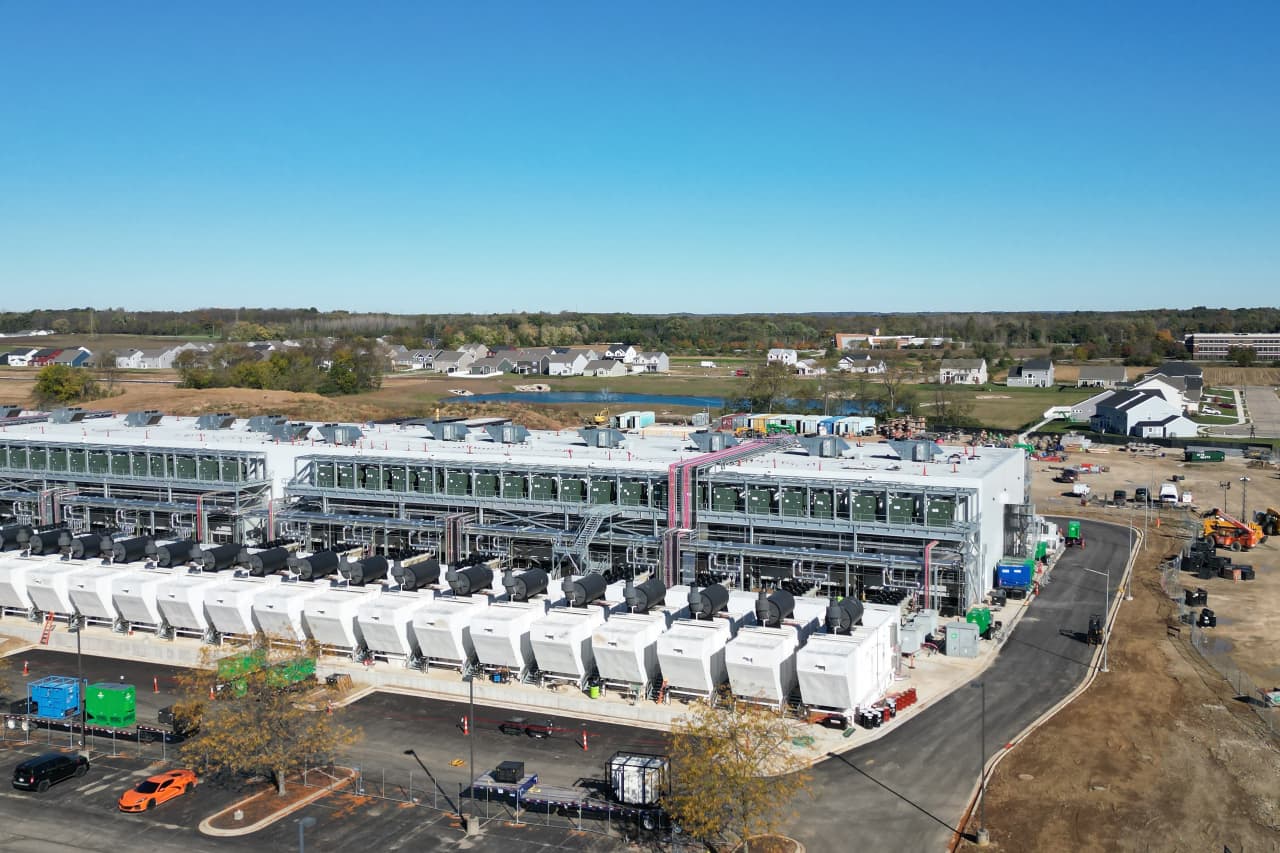
- The AI trade is showing cracks at the edges: October has now seen three data-center IPOs shelved, including a South Korean flop, with backers ranging from Nvidia to Blackstone to SoftBank, per MarketWatch.
Markets Overview
Monday marked 39 years since Black Monday — Oct. 19, 1987, when the S&P 500 lost 20.5% in a single session to close at 224.84, still its worst day on record. Motley Fool used the anniversary to ask whether buying crashes has paid off historically.
The bigger backdrop is unease beneath a record-setting tape. The S&P 500, Nasdaq Composite and Dow have all notched multiple all-time highs this year as the AI-led bull market passed its fourth anniversary — but Morgan Stanley argues the index is masking a hidden pullback in individual stocks, and says an index retreat would itself signal a buying opportunity. Portfolio managers have emphasized free cash flow, profitability, strong balance sheets and stable earnings since mid-summer, the bank notes.
Two other signposts worth tracking: MarketWatch reports the Value Line Median Appreciation Potential — which has a good record forecasting smaller-stock returns — points to a bearish next four years for small caps. And Motley Fool flags a stark market warning from Warren Buffett, alongside a reassuring historical stat: in all 19 midterm elections since 1950, the S&P 500 was higher one year later. This year's vote falls Tuesday, Nov. 3.
Earnings Reports
- General Motors (GM) beat Wall Street's Q3 expectations, narrowed its full-year earnings guidance, and raised its adjusted automotive free-cash-flow outlook (CNBC).
- Netflix (NFLX) reports after the bell today. The stock is down 26% YTD even as the broad market rallied — Motley Fool frames the print as a pivotal moment for a company that "disrupted entertainment" but lately looks disrupted itself. The outlet also predicts Oct. 21 will be a huge day for the market.
- Small-cap scoreboard: Vicor missed on GAAP EPS ($1.33, a $0.04 miss) but beat on revenue ($197.11M, +$10.08M); Iridium's revenue of $245.7M missed by $2.84M; Mueller's EPS of $1.00 missed by a penny while revenue of $1.42B crushed estimates by $140M; Valmont beat on EPS ($6.24, +$0.50) but missed on revenue ($1.1B, -$10M); United Community Banks posted in-line EPS of $0.77 (Seeking Alpha).
- Week ahead: CNBC flags Capital One and Abbott among names reporting this week with accelerating analyst profit forecasts.
- HDFC Bank (HDB) said on its Oct. 17 fiscal Q2 call that operational efficiency and lending momentum are accelerating across core retail and commercial segments.
Fed & Economic Data
The Fed story is the day's macro spine. Beyond the minutes signaling another 2026 hike, Motley Fool notes Fed Chair Kevin Warsh's recent three-word message suggests "the worst is yet to come" for Wall Street — a stark framing as yields sit at multi-decade highs.
On the inflation front, prices accelerated again to 3.7%, and Motley Fool argues Walmart and Costco (COST) could be the biggest winners as stretched consumers chase value. The same outlet reports a new study directly disputing the President's claim that tariffs aren't driving prices higher — notable given the Dow's strong statistical run during Trump's first term.
Separately, the Social Security Administration announced the 2027 cost-of-living adjustment on Oct. 14, with spillover effects for spousal benefits next year.
Hot Sectors
Semiconductors are the sector to watch — for opposite reasons. The PHLX Semiconductor Index's eight-session slide through Oct. 16 was its longest since 2008, and Motley Fool notes the bond market is "sending a warning" to Nvidia (NVDA) shareholders even apart from any equity weakness. Yet Taiwan Semiconductor (TSM) management is upgrading its forecast amid soaring AI demand — a potential floor under the trade.
In memory chips, Seeking Alpha reports Micron (MU) and SanDisk rebounded while China's CXMT slid despite a profit surge.
Stock News
- AI infrastructure financing is getting harder: MarketWatch counts three shelved data-center flotations in October alone — backed by Nvidia, Blackstone and SoftBank — capped by a South Korean IPO flop, as investors grow unconvinced of the economics.
- UPS (UPS) now yields 6.7% after cutting ties with Amazon, and Motley Fool examines whether the dividend survives 2027.
- Berkshire Hathaway (BRK.A) collected $4.4 billion in dividends last year from BNSF, which it bought for $34.5 billion in 2010 — a case study in buy-and-hold compounding.
- AI infrastructure names under pressure: Motley Fool cites growing concern about Applied Digital's (APLD) large cash needs, and the billions Nebius (NBIS) must invest to capture its AI opportunity. Airbnb (ABNB), by contrast, is up 10% over the past two weeks.
Market Analysis
The rotation trade is getting louder. Goldman Sachs says big tech is wobbling and earnings growth is set to slow next year — and recommends 23 unloved, consumer-facing laggard stocks as the better way forward. That squares with Morgan Stanley's quality-over-momentum observations and the market's growing scrutiny of cash-burning AI names.
Retail investors, for their part, are debating newer terrain: r/investing threads this week focused on "agentic" AI trading features (including Robinhood's AI agents that place trades on your behalf), self-directed 401(k) strategy with weak employer matches, and how much portfolio weight to give foreign stocks.
What to watch: Netflix's results tonight and the market's reaction Wednesday; the rest of the week's earnings parade (Capital One, Abbott); the Nov. 3 midterms, with that 19-for-19 historical tailwind; and mounting odds of a year-end Fed hike per the October minutes.