10-Year Yield Hits 4.81% — Highest Since 2023 — as a Hawkish Warsh Fed Meets Trump Pressure and a Heavy AI Earnings Week
The tape enters September stretched: The Motley Fool notes the Dow, S&P 500 (^GSPC), and Nasdaq Composite have all rocketed to multiple record highs in 2026, with the S&P 500 topping out at an all-time high in August ...
Quick Hits
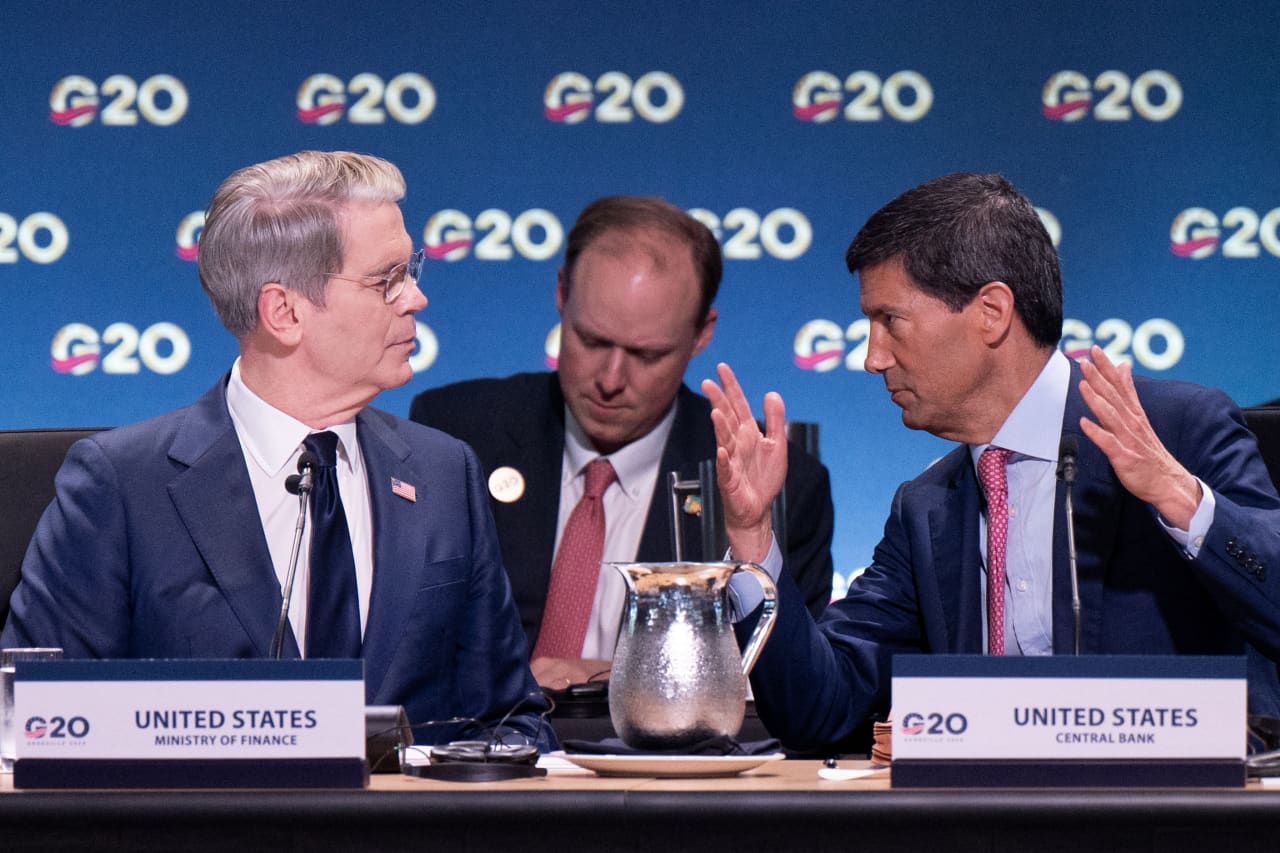
- The 10-year Treasury yield broke 4.81% Thursday, its highest level since November 2023 and up roughly 80 bps since March. A widely-tracked r/investing thread attributes the selloff to oil pressure from U.S.-Iran escalations and a hawkish tone from Fed Chair Kevin Warsh at Jackson Hole — though a MarketWatch strategist argues the yield surge could reverse sooner than investors expect as cyclical forces overwhelm debt-sustainability fears.
- Fed politics are the show. Per The Motley Fool, President Trump claims Warsh will "do what he has to do" on interest rates while continuing to throw the Fed under the bus; separately, MarketWatch argues whether the Fed hikes this month isn't as big a deal for stocks as widely assumed.
- AI earnings are booming; the stocks aren't. Broadcom's (AVGO) AI revenue soared 221% with profits tripling, yet the stock is flat. Alphabet (GOOGL) grew Google Cloud revenue 82% year over year, but the market has soured on the stock since its plan to lift capex to up to $205 billion this year.
- MongoDB (MDB) tumbled despite strong earnings after Atlas multi-cloud database revenue growth came in unchanged for the fifth consecutive quarter — a "disappointing" plateau for investors, per MarketWatch.
- Micron (MU) faces a labor flashpoint: its Taiwan unions are demanding a one-off bonus worth 83 months of pay and could hold a strike vote this month, The Motley Fool reports.
Markets Overview
The tape enters September stretched: The Motley Fool notes the Dow, S&P 500 (^GSPC), and Nasdaq Composite have all rocketed to multiple record highs in 2026, with the S&P 500 topping out at an all-time high in August — even as the Shiller CAPE ratio leaves many investors "antsy" about a possible bear market.
Two defensive signals are worth noting. MarketWatch highlights that so-called "negative-beta" stocks — those that rise when the S&P falls — are "weirdly" keeping up with the broader market, offering a way to ride out volatility events, per one strategist. And The Motley Fool flags a soft rotation underway, with capital quietly flowing from tech into dividend ETFs as AI momentum slows at the margins.
Elsewhere, privacy coin Zcash (ZEC) hit an 8-year high, with The Motley Fool's analyst bullish on ZEC for the rest of 2026.
Earnings Reports
Software split the room. MongoDB's sell-off despite a strong quarter contrasted with Snowflake (SNOW), whose shares are surging as Wall Street analysts see continued benefit from the AI revolution, per MarketWatch. GitLab (GTLB) also jumped after highlighting AI-fueled growth prospects, The Motley Fool notes.
Hardware kept delivering. Dell (DELL) shares rose on jumping AI server demand, drawing price-target hikes from Morgan Stanley, Goldman Sachs, and Citigroup. Broadcom's results (above) underscore the semiconductor side of the trade.
Smaller prints: Lands' End (LE) fell after revenue guidance arrived below expectations (Seeking Alpha); VersaBank posted non-GAAP EPS of C$0.38 on C$38.81M in revenue; and Amber International withdrew its outlook alongside Q2 results.
Fed & Economic Data
The bond market is the story. Beyond the 4.81% milestone, the counterargument comes from MarketWatch, where one strategist contends the alarming yield surge may reverse as cyclical forces overwhelm fiscal-sustainability fears — while a separate MarketWatch piece cautions that the September rate decision itself matters less for stocks than other risks investors face.
The political backdrop is combustible: The Motley Fool details how Trump's public pressure on Warsh — and the chair's own three-word message that's "sending shockwaves through Wall Street" — have made this Fed cycle anything but boring.
On the consumer, St. Louis Fed data tracked by The Motley Fool shows credit card delinquencies at 6.4% at small banks versus 2.9% across all banks — a two-tier consumer worth watching.
Hot Sectors
Power is the new AI bottleneck — and the trade. With chips no longer the constraint, gas turbine prices are on track to nearly triple as natural gas demand surges on AI data-center buildouts, per The Motley Fool. Vertiv (VRT) just made an up to $2.6 billion bet to solve data centers' power problem, and Eos Energy (EOSE) spiked Wednesday on a battery-storage partnership with Google and MN8 Energy.
Aerospace keeps running hot, with GE Aerospace (GE) up 22% over the past year — though The Motley Fool asks whether laggard Textron (TXT) is now the value play.
The defensive complex is firming. Altria (MO) just declared its 61st dividend increase in 57 years; insurers are ramping buybacks as pricing softens (Progressive (PGR) repurchased ~$1 billion in 1H 2026, Chubb (CB) $1.37 billion in Q2 alone); and Berkshire Hathaway sold three bank stocks, per The Motley Fool.
Stock News
- Micron (MU) closed at $958.73 on Monday, 21% below its June all-time high — still sitting on enormous gains, per The Motley Fool, but the Taiwan strike vote looms.
- Intel (INTC) has roughly tripled in a year, from $24 to near $89 — up about 141% in 2026 alone.
- CoreWeave (CRWV) trades near $82, down ~47% from its 52-week high, with quarterly interest expense hitting $640 million — 2.4 times last year's level — a stark reminder of what the AI buildout costs to finance.
- IPO history in the making: SpaceX debuted in early June at a near-$1.8 trillion market cap, raising over $85 billion, and Anthropic is set to follow — two of the largest IPOs ever, per The Motley Fool.
- August retrospectives: Figma (FIG) +13%, Remitly (RELY) +17.4% to a 52-week high, and Redwire (RDW) +24% on strong Q2 earnings. CytoSorbents (CTSO) announced a 1:20 reverse stock split.
Market Analysis
The week's defining tension: fundamentals and fear are peaking simultaneously. AI earnings are exceeding expectations almost everywhere — Broadcom, Dell, Alphabet's cloud — yet stocks are flat to lower on the news, suggesting valuation and capex fatigue. The CoreWeave interest-expense spiral and Alphabet's $205 billion spending plan show the market now scrutinizing not just AI revenue, but what it costs to generate.
Layer on a 4.81% 10-year yield and a politically cornered Fed chair, and the quiet rotation into dividend payers, insurers, and negative-beta names looks less like a fad and more like positioning.
What to watch: the September Fed decision (and whether Warsh's "shockwave" words become policy), whether the yield surge reverses as one strategist predicts, and Micron's Taiwan strike vote — a first real labor test for the AI supply chain.