Record Tech Gains Clash with a Historic Fed Pivot: Inside a Volatile Market Week
The market is experiencing severe friction between blockbuster mega-cap tech earnings and mounting macroeconomic risks. The Dow tumbled 1,153 points earlier this week following Fed Chair Kevin Warsh's policy shift, an...
Quick Hits
- Fed Shock: Fed Chair Kevin Warsh shelved forward-looking guidance for the first time in a decade, keeping rates unchanged and triggering a 1,153-point drop in the Dow Jones Industrial Average.
- Mega-Cap Tech Dominates: Microsoft (MSFT) recorded the largest single-day dollar value gain in stock market history, surging 15.51%—its best day since March 2020.
- AI Capex Soars: Amazon (AMZN) crushed earnings driven by a 37% jump in AWS revenue, but hiked its 2026 capital expenditures to a staggering $220 billion, explicitly citing surging AI memory costs.
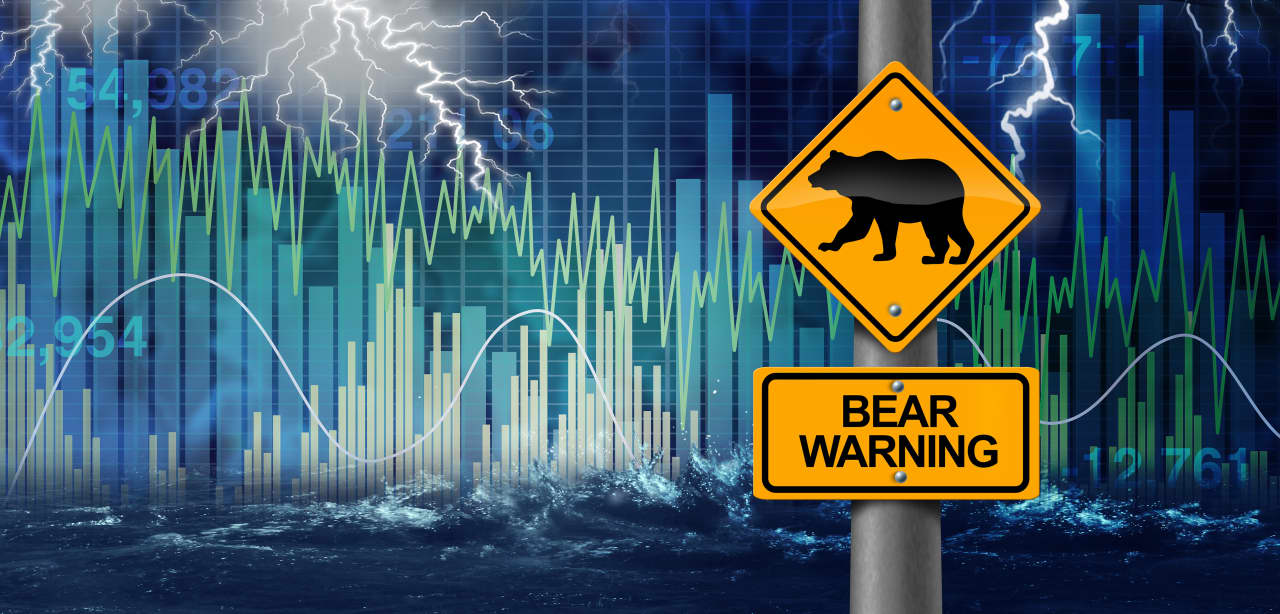
- Historical Valuation Red Flags: The cyclically adjusted price-to-earnings (CAPE) ratio has closed above 40 for three consecutive months—a rarity seen only once before in the past century during the dot-com bubble.
- Insider Bearishness: Corporate insiders are exhibiting their most bearish behavior in over 20 years, even as retail investors hunt for dips in names like Rocket Lab (RKLB) and Brookfield Renewable (BEPC).
Markets Overview
The market is experiencing severe friction between blockbuster mega-cap tech earnings and mounting macroeconomic risks. The Dow tumbled 1,153 points earlier this week following Fed Chair Kevin Warsh's policy shift, and the S&P 500 is down 0.87% over the past month. RBC notes that while equity volatility around Fed transitions is normal, it is currently opening up a "valuation opportunity" for discerning investors.
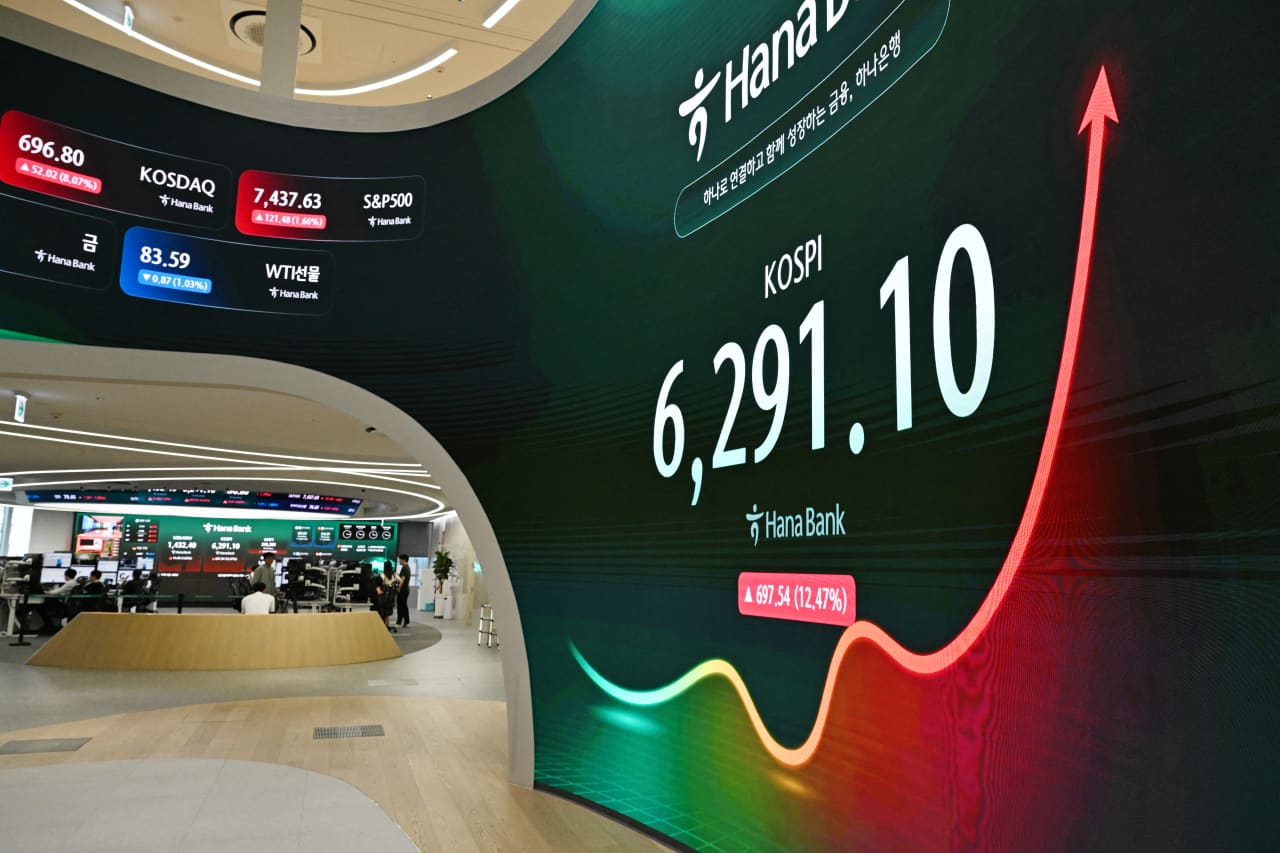
Beneath the surface, the global AI trade is accelerating. South Korea's Kospi saw its best trading day in history, driven by a massive rally in semiconductor giants as the market prices in an acute shortage of AI memory infrastructure.
Fed & Economic Data
All eyes are on the Federal Reserve, which held interest rates steady but delivered a historic shock by stripping away its traditional forward-looking guidance—a move unseen in 10 years. This ambiguity leaves investors grasping for today's critical inflation data, which many argue matters more than the Fed meeting itself. June's report showed a promising 0.4% drop in inflation from May, though rising Middle East oil prices threaten a July reversal.
The macro backdrop is increasingly fraught. JPMorgan Chase CEO Jamie Dimon issued a stark 12-word warning to investors this week. Meanwhile, historical indicators are flashing crimson: The Motley Fool highlights that the CAPE ratio's sustained stay above 40 mirrors the exact conditions of the late-1990s dot-com bubble, while MarketWatch reports that corporate insiders haven't been this bearish on their own stock in two decades.
Earnings Reports
It was a defining week for mega-cap technology. Microsoft (MSFT) drove the market narrative following an exceptionally strong quarter. Amazon (AMZN) followed suit, soaring as AWS sales expanded 37% year-over-year, well ahead of the 31% consensus. However, Amazon's staggering $220 billion 2026 capex guide highlights a brewing crisis in AI infrastructure, specifically memory bottlenecks.
Consumer-facing brands delivered notable turnarounds:
- Chipotle (CMG): Raised its full-year guidance after a 9.3% revenue jump, signaling that its post-Brian Niccol turnaround is taking hold after a 50% slide from its 2024 peak.
- Starbucks (SBUX): Raised its full-year outlook after reporting its fourth straight quarter of same-store sales growth, climbing 7.9%. CEO Brian Nicco noted the company's momentum is now "truly measurable."
- Reddit (RDDT): Crushed revenue and earnings estimates while issuing upbeat guidance, though shares slid in after-hours trading despite the fundamental strength.
- Moderna (MRNA): Reiterated its 2026 growth target despite a norovirus trial missing an early metric, anticipating that 55% of its H2 revenue will land in Q3.
Hot Sectors & Stock News
Semiconductors & AI Infrastructure As Nvidia (NVDA) CEO Jensen Huang identifies memory as AI's biggest bottleneck, capital is aggressively rotating into memory suppliers and alternative infrastructure plays. In South Korea, SK Group Chairman Chey Tae-won made his first-ever personal purchase of SK hynix shares, underscoring massive insider confidence in the memory supercycle. Stateside, investors are closely tracking the implications of the CoreWeave (CRWV) and Leidos (LDOS) partnership, which expands the AI conversation beyond just Nvidia chips and hyperscaler clouds into broader defense and enterprise integration.
Energy IPOs & Renewables AI infrastructure demand is placing unprecedented strain on the power grid, sparking a renaissance in energy markets. A new wave of energy IPOs is emerging to support data center buildouts. Concurrently, retail investors are finding entry points in the transition space, loading up on Brookfield Renewable Partners (BEP, BEPC) as shares dip 25% below recent highs.
Market Analysis
The current market is a study in stark contrasts. On one hand, AI-driven corporate spending is firing on all cylinders, evidenced by Amazon’s $220 billion capex deployment and Microsoft's record-smashing valuation jump. On the other, the broader market is flashing severe historical warning signs: a CAPE ratio over 40, a Fed chair abandoning forward guidance to maintain flexibility amid political pressure from Washington, and a two-decade high in insider selling.
With President Donald Trump openly pressuring the Fed to cut rates, Chair Warsh's refusal to bend leaves the bond market on edge. Going forward, sophisticated investors must parse whether the robust fundamental earnings of a handful of mega-cap tech titans can insulate the broader indices from a deteriorating macroeconomic and inflationary backdrop.
Sources