The "Black Box" Fed, Samsung's "Sell-the-News" Surge, and a Korean Bear Market
Global markets are flashing mixed signals as summer trading heats up, with institutional money rotating defensively while retail investors debate sky-high valuations. South Korea’s once-booming stock market has offici...
Markets Overview
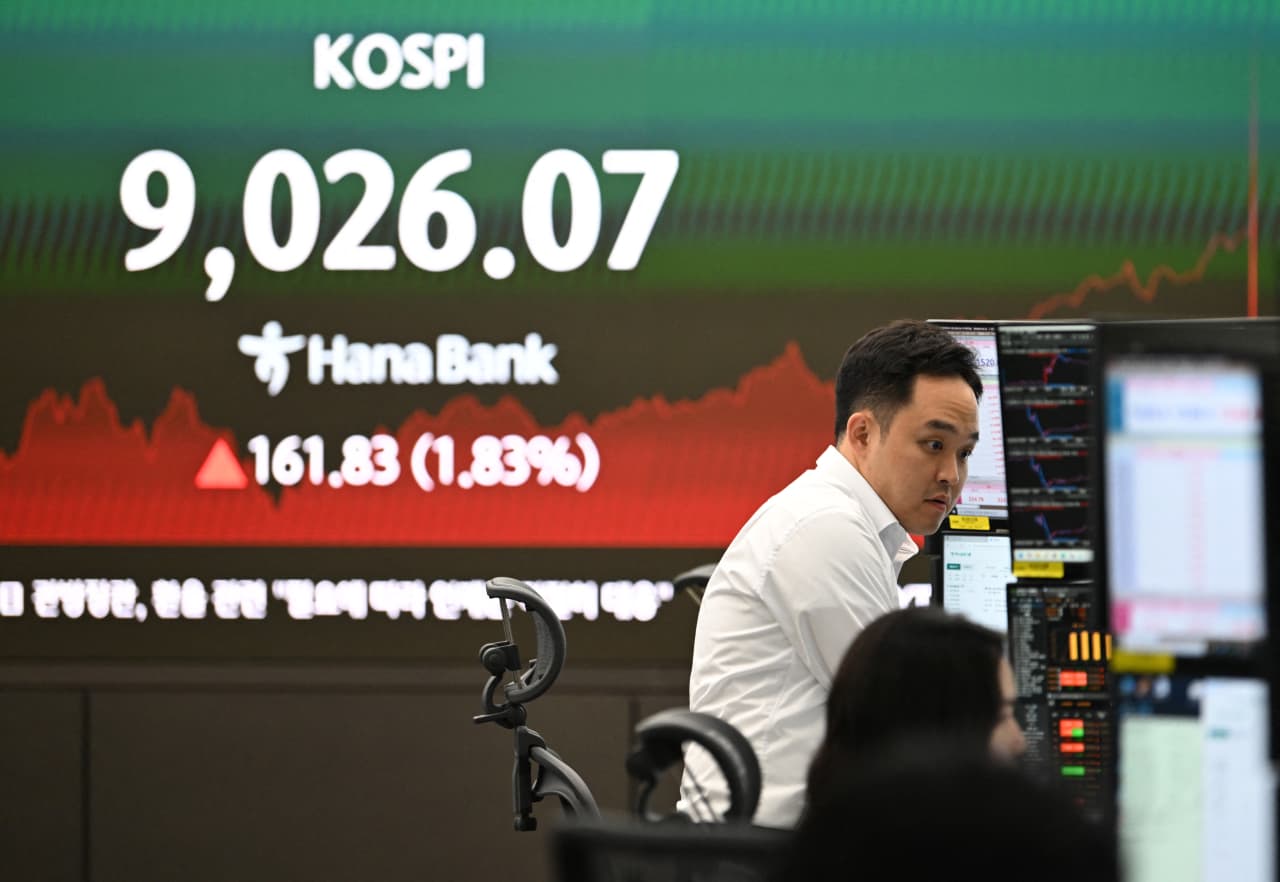
Global markets are flashing mixed signals as summer trading heats up, with institutional money rotating defensively while retail investors debate sky-high valuations. South Korea’s once-booming stock market has officially plunged into bear territory, weighed down by international outflows, excessive leverage, and competitive pressures. Back home, the broader market tone is cautious; most S&P 500 tech stocks are currently trading at least 20% below their highs, though select semiconductors like Micron (MU) and AMD (AMD) are leading the XLK ratings. Valuations remain a central debate among sophisticated investors, with the Shiller P/E ratio (CAPE) hovering around 42 and the Buffett Indicator sitting at historically elevated levels.
Earnings Reports
Samsung Electronics delivered a mixed bag for the quarter, posting preliminary results that pointed to a staggering 19-fold jump in profit—the most profitable quarter in the company's history—only to face an immediate sell-off from a tough shareholder base. Despite the record-breaking numbers, investors dumped the stock over sustainability concerns and macro headwinds, dragging down peers like Micron (MU) in early trading, though some analysts remain highly bullish on AI memory stocks like Micron and Sandisk (SNDK) heading into the back half of the year.
Fed & Economic Data
Federal Reserve Chair Kevin Warsh is preparing to fundamentally change the central bank's approach to market communication by stopping the practice of pre-scripting policy moves. Former St. Louis Fed President James Bullard warned that this shift toward untelegraphed rate decisions will likely trigger massive volatility for traders accustomed to forward guidance. This communication pivot arrives at a precarious time, as the Fed's initial July inflation forecast looks deceptively strong on the surface, but hides sinister underlying data that could force the central bank to raise interest rates in the second half of the year.
Hot Sectors
The technology sector is experiencing a harsh reset, with Meta (META) shedding 11% in June and Netflix (NFLX) dropping 17% over the same period due to mounting skepticism over heavy AI capital expenditures and business model sustainability. Capital is aggressively rotating into energy and infrastructure; Constellation Energy (CEG) is being touted as an indispensable AI infrastructure play, while oil giants like ExxonMobil (XOM) are drawing bids as safe-haven dividend growers. However, traditional energy producers are facing head-scratching weakness, with traders noting that oil stocks and LNG plays are selling off despite massive supply chain disruptions from the recent Iran conflict that are projected to take two years to fully resolve.
Stock News
M&A activity is heating up the healthcare space, with Vertex Pharmaceuticals (VRTX) making a massive $10 billion bet to acquire Crinetics Pharmaceuticals (CRNX) for $85 per share in cash. In the AI and cloud space, Wall Street is growing increasingly nervous about Meta Platforms (META) potentially spending up to $145 billion on AI in 2026 alone, prompting debates over whether the social media giant's push into cloud computing will actually yield returns. Meanwhile, SpaceX (SPCX) continues to dominate post-IPO headlines as its bonds trade like junk, highlighting a stark divide between euphoric equity investors and skeptical credit markets, while Greg Abel, Warren Buffett's successor at Berkshire Hathaway (BRK.B), quietly added to his position in a magnificent tech stock.
Market Analysis
The current market landscape is defined by a tense standoff between underlying macro risks and resilient corporate earnings. The crypto sector is flashing signs of strain, highlighted by Strategy (formerly MicroStrategy) being forced to sell 3,588 Bitcoin ($216 million) simply to fund dividends on its digital credit securities—a move that exposes the limits of its highly leveraged balance sheet model. Looking ahead, sophisticated investors are abandoning lazy narratives; quantitative testing has officially debunked the classic "hurricane rebuild trade" (buying Home Depot and Lowe's at season open), which has historically lost 2% to 3% per event. Traders should watch for upcoming inflation data that could validate the Fed's hawkish pivot, alongside a potential tide of tech IPOs reshaping passive index weightings as the summer progresses.