Markets Rally on Thin Air as Iran War Clouds Thicken and Hiring Hits COVID-Era Lows
The S&P 500 is down roughly 7% year-to-date, battered by the Iran conflict, oil volatility, and mounting economic uncertainty — but Tuesday's session saw a sharp, head-scratching rally that left traders divided. The N...
Markets Overview
The S&P 500 is down roughly 7% year-to-date, battered by the Iran conflict, oil volatility, and mounting economic uncertainty — but Tuesday's session saw a sharp, head-scratching rally that left traders divided. The Nasdaq surged 3.6% in a single session, mimicking the April 9th rebound, despite a barrage of negative headlines from the White House on Iran. Reddit's trading communities were nearly unanimous: "Markets are up big on... no substance at all," with no concrete catalyst behind the move. The Invesco QQQ ETF (QQQ) sits about 8% off its all-time high, and the mood remains fragile heading into Good Friday market closures on April 3rd.
Earnings Reports
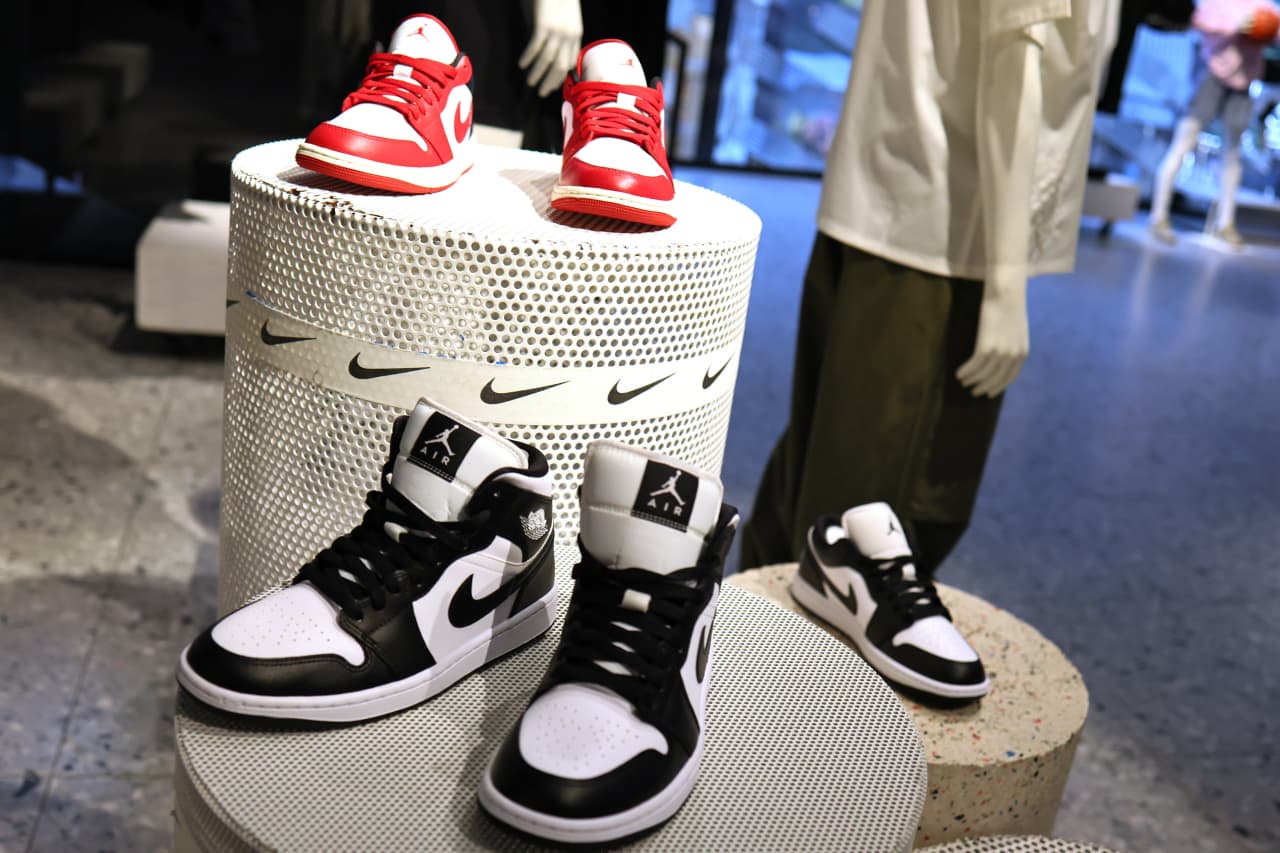
Nike (NKE) stock dove after quarterly results that technically beat lowered expectations but failed to convince investors the turnaround is working. CEO Elliott Hill had called it the "middle innings of our comeback" last quarter — but a fresh sales warning suggests the scoreboard isn't cooperating. The market's verdict was swift and negative.
Cal-Maine Foods (CALM) gained after earnings topped beaten-down estimates, offering a rare bright spot among consumer staples. Tilray (TLRY) missed on the bottom line, posting non-GAAP EPS of $0.02 (missing by $0.05), though revenue of $206.7M edged past estimates by $5.4M.
Marvell Technology (MRVL) surged roughly 8% after Nvidia (NVDA) disclosed a $2 billion investment and strategic partnership around NVLink and custom AI chips, pushing shares into the high $90s on elevated volume. Meanwhile, Huawei's cloud computing revenue actually dropped in 2025, underscoring the widening gap between U.S. and Chinese AI infrastructure players.
Fed & Economic Data
Hiring has plunged to levels not seen since the COVID-era shutdowns, according to the chief economist at Navy Federal Credit Union — a data point that adds recession kindling to an already smoldering macro picture. The Federal Reserve faces an increasingly ugly setup: oil-driven inflation pressures colliding with a deteriorating labor market. Regional banks have felt the squeeze, with the SPDR S&P Regional Banking ETF (KRE) pulling back from $74 in February as rate-cut expectations remain muddled. Crypto markets resumed their slide as investors rotated into safer assets, with concerns mounting that the Fed may be boxed out of cutting rates by sticky energy prices.
Hot Sectors
Energy is the most complicated — and most consequential — corner of the market right now. Oil prices keep grinding higher across WTI, Brent, and gasoline futures as the Strait of Hormuz disruption intensifies; Middle Eastern floating storage ballooned by 38 million barrels in a single week, from 12.7M to 50.9M barrels, with many cargoes stranded in the Persian Gulf. Analysts see a wide $50-to-$200 per barrel range depending on how Iran developments unfold. Integrated majors like Chevron (CVX) and ExxonMobil (XOM) have attracted the bulk of inflows, but smaller E&P names may offer more upside. Warren Buffett's Berkshire Hathaway (BRK.B) reiterated it may "own Occidental Petroleum forever" — a position now firmly in the green.
Defensives are quietly outperforming: Verizon (VZ) is up 24% year-to-date and yields over 5%, making it a rare 2026 winner in tech-adjacent land. Dividend stalwarts and energy income plays are drawing rotation as growth names buckle.
Software has been punished as Wall Street prices in the risk that AI could disrupt traditional SaaS business models, creating selective buying opportunities for the brave.
Stock News
Nvidia (NVDA) remains the AI bellwether — up 1,220% over five years — but the $2B Marvell partnership signals its ambitions are expanding deeper into custom silicon and interconnect infrastructure. Google's new "TurboQuant" technology is raising questions about whether memory-intensive AI architectures face disruption, putting a spotlight on Micron (MU) after its monster run.
Biogen (BIIB) sank over 2% on a day when nearly everything else rallied, diverging sharply from broad market sentiment. SoFi (SOFI) is down 35% year-to-date despite "nearly flawless" operational performance — a case study in multiple compression. Microsoft (MSFT) just posted its worst quarter since 2008 after three consecutive years of double-digit gains, prompting debate over whether this is a generational buying opportunity or a warning.
Warren Buffett revealed his final major move as Berkshire CEO: a $19.8 billion bet — and it wasn't on AI. He also admitted selling Apple (AAPL) "too soon" but said he wouldn't be buying back in at current market levels.
Market Analysis
The dominant tension remains oil versus everything else. If the Strait of Hormuz stays effectively closed — and the White House has signaled indifference to reopening it — energy inflation will continue squeezing consumers, corporate margins, and the Fed's rate-cut calculus simultaneously. The 38-million-barrel surge in floating storage suggests physical markets are already seizing up.
Tuesday's rally-on-nothing has a familiar feel: short covering and hopeful positioning ahead of potential peace signals, not fundamental improvement. History says the S&P 500's 7% drawdown is well within normal corrective territory, but the confluence of hot war, frozen shipping lanes, and COVID-level hiring weakness is not a typical correction backdrop.
Watch this week: Good Friday closures (April 3) will thin liquidity. Any Strait of Hormuz escalation over the long weekend could gap markets hard on Monday. Oil positioning, jobless claims, and White House rhetoric on Iran are the three variables that matter most. Defensive positioning and dividend income strategies continue to make sense until visibility improves.