Powell Signals Rate Uncertainty as Dow Enters Correction Territory
The sell-off that defined Q1 deepened into quarter-end. The **S&P 500** (^GSPC) is now down roughly 7% year-to-date, with the index sinking to its lowest point of the year last week — off about 8.5% from its highs and...
Daily Finance Digest — March 31, 2026
Markets Overview
The sell-off that defined Q1 deepened into quarter-end. The S&P 500 (^GSPC) is now down roughly 7% year-to-date, with the index sinking to its lowest point of the year last week — off about 8.5% from its highs and flirting with correction territory. The Nasdaq Composite has officially crossed that threshold, weighed down by its 60% concentration in tech names getting repriced on AI uncertainty and geopolitical risk. The Dow Jones Industrial Average (^DJI) joined the correction club as of last Thursday's close.
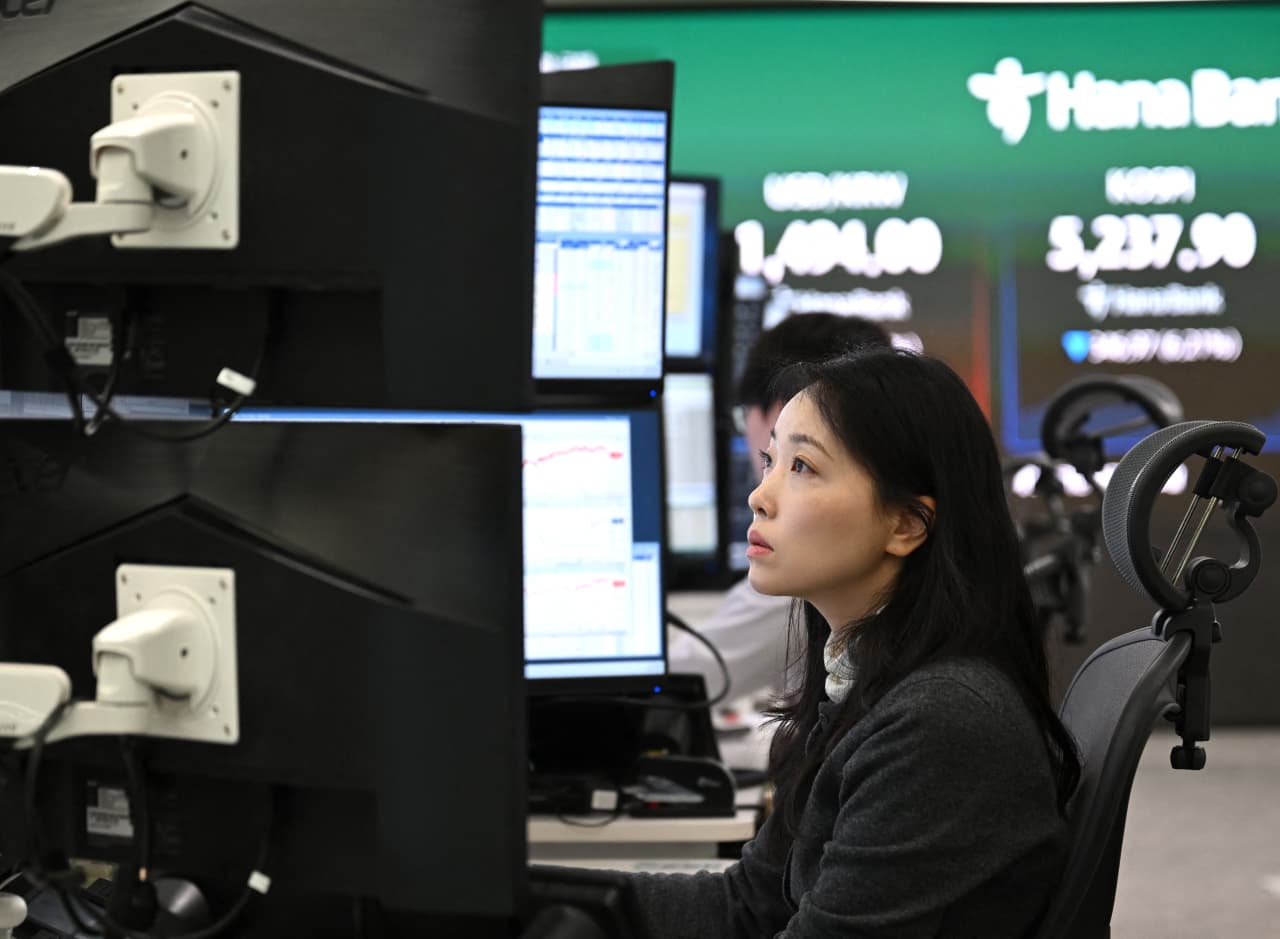
Internationally, South Korea — 2026's best-performing market through February — has become March's worst performer as cheap energy tailwinds and the memory-chip AI trade both fade simultaneously.
Nasdaq is moving to smooth the path for mega-listings: a proposed "fast entry" rule would allow newly public giants like SpaceX and OpenAI to join the Nasdaq-100 shortly after their IPOs, a structural shift worth watching for index-fund investors.
Earnings Reports
FactSet Research Systems (FDS) delivered a clean beat — non-GAAP EPS of $4.46 topped estimates by $0.08, while revenue of $611M came in $6.05M above consensus. A solid print from a data-infrastructure name in a quarter where most tech has struggled.
American Shared Hospital (AMS) went the other direction, posting a GAAP loss of $0.09/share on revenue of $7.73M, missing by $1.05M. Aya Gold & Silver (AYA) reported GAAP EPS of $0.12 on revenue of $75.32M and issued FY26 guidance — a timely update given the gold rally narrative.
Palantir (PLTR) continues to command attention despite its lofty valuation, with bulls pointing to booming commercial and government AI platform adoption. The debate over whether the growth justifies the multiple remains the stock's central tension.
Fed & Economic Data
Fed Chair Jerome Powell struck a deliberately ambiguous tone, saying risks to the economy "suggest rates could go lower or higher." The key line: the Fed isn't facing an imminent decision because "we don't know what the economic effects" of the Iran conflict will be. Translation — the Fed is in wait-and-see mode, and markets shouldn't expect clarity anytime soon.
Multiple Fed officials signaled that the rate-cutting cycle may be over, despite 175 basis points of cuts since 2024. Notably, the 10-year Treasury yield has barely budged through the entire easing cycle — a disconnect that underscores how little control the Fed has over the long end of the curve. For bond investors, four ETF strategies are circulating as hedges against this persistent rate uncertainty.
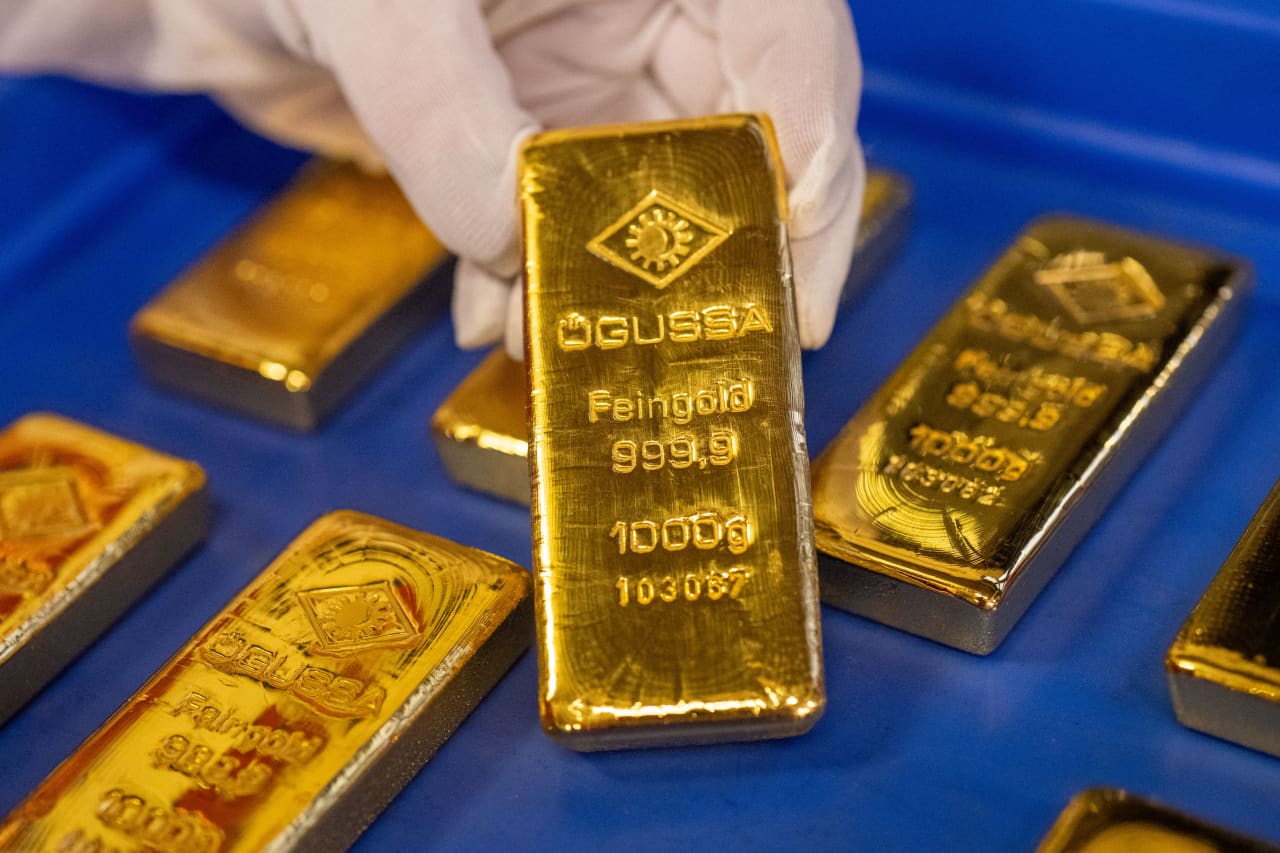
UBS is calling time on the gold bull run, arguing that if the Fed holds rates steady for the rest of the year — which is now the market's base case — bullion prices could retreat. A contrarian call worth tracking given gold's momentum.
Hot Sectors
Energy and AI infrastructure are converging into a single trade. Rising residential electricity rates near datacenter construction zones highlight the growing competition for power. The thesis linking AI datacenter buildouts, hydrocarbon demand, and private credit is gaining traction — and western oil stocks are being positioned as a derivative play on both the Iran conflict and insatiable AI power demand.
Healthcare is emerging as a defensive rotation target post-pullback. Pfizer (PFE), down 25% over five years against a 68% S&P gain, is showing technical behavior not seen since 2022. Bristol Myers Squibb (BMY) is drawing income-investor attention with its 4.4% dividend yield. Dividend stocks broadly are a dominant 2026 theme as investors seek stability.
Software stocks have been hammered as investors reprice AI disruption risk — though selective opportunities are emerging in the wreckage.
Stock News
SpaceX absorbed xAI (which also owns X, formerly Twitter) at a combined $1.25 trillion valuation, consolidating the Musk empire ahead of what's expected to be a landmark IPO. The deal merges Musk's AI ambitions with SpaceX's infrastructure and cash-generation engine — creating one of the largest private-to-public transitions in history.
Amazon (AMZN) shares are down 20% from their highs on fears around a planned $200 billion capex spend this year, compounded by recession anxiety. But bulls got fresh ammunition from developments in OpenAI's ecosystem and the robotaxi space that could validate the AI investment thesis.
SoFi Technologies (SOFI) has cratered 35% year-to-date despite reporting "nearly flawless" operational performance — a case study in how macro fear is overriding fundamentals for growth fintech names.
Stanley Druckenmiller doubled down on Alphabet (GOOGL) and Amazon (AMZN) for a second consecutive quarter, adding to positions in two of the most beaten-down mega-cap AI plays.
Insider selling flagged at Sionna Therapeutics (SION) and Collegium Pharmaceutical (COLL), with C-suite officers trimming stakes.
Market Analysis
Three forces are defining this market: rate uncertainty (the Fed won't commit), geopolitical risk (Iran conflict economics remain unquantifiable), and AI capex anxiety (are the hundreds of billions being spent justified?). The result is a Q1 that felt far worse than the 7% headline decline suggests.
Warren Buffett's latest moves suggest continued caution from the Oracle of Omaha — a signal sophisticated investors are weighing heavily. History says corrections of this magnitude are normal and recoverable, but the confluence of macro risks makes this one harder to dismiss as routine noise.
What to watch this week: Any escalation or de-escalation on the Iran front will move everything. The "rates on hold" consensus is fragile — any inflation surprise could shatter it. And with Q1 earnings season approaching, the market needs corporate guidance to either validate or destroy the recession narrative. Netflix's (NFLX) latest price hike will serve as a real-time consumer stress test in a higher-oil-price environment.