Futures Sink, Oil Surges as Iran War Rattles Markets and Powell Warns of Rate Uncertainty
U.S. stock futures fell sharply Sunday night as oil prices surged again, extending Friday's Wall Street losses amid growing fears that the economic fallout from the Iran conflict will be deeper and longer-lasting than...
Markets Overview
U.S. stock futures fell sharply Sunday night as oil prices surged again, extending Friday's Wall Street losses amid growing fears that the economic fallout from the Iran conflict will be deeper and longer-lasting than initially priced in. The S&P 500 (^GSPC) is now down roughly 7% year-to-date after gaining more than 16% in 2025, with recession odds hitting their highest level in years. Nasdaq is moving to ease the path for megacap IPOs like SpaceX and OpenAI to join the Nasdaq-100 via a new "fast entry" rule — a signal the exchange expects a wave of landmark listings ahead.
Wall Street's major averages did manage to push higher earlier in the holiday-shortened week, but the late-week selloff and deteriorating weekend sentiment have set a decidedly risk-off tone heading into Monday. The VIX remains elevated as investors grapple with a triple threat: geopolitical escalation, sticky inflation, and an increasingly uncertain Fed path.
Earnings Reports
Aura Biosciences posted GAAP EPS of -$1.76, beating estimates by $0.19 — a rare bright spot in a thin earnings week. Unicycive Therapeutics missed by $0.02 with GAAP EPS of -$1.67. Terrestrial Energy reported GAAP EPS of -$0.39.
On the preview front, TD SYNNEX and AIRO Group Holdings are on deck for Q1 2026 and Q4 2025 results respectively. Meanwhile, Maze Therapeutics (MAZE) drew attention after its President and Chief Medical Officer exercised 30,000 stock options and immediately sold all underlying shares ahead of the Q4 earnings report — the kind of insider activity that tends to raise eyebrows.
Abbott Laboratories (ABT) is down 22% after a disappointing quarter that missed consensus revenue estimates, though some analysts are calling it a screaming buy at current levels given its dividend yield and long-term positioning.
Fed & Economic Data
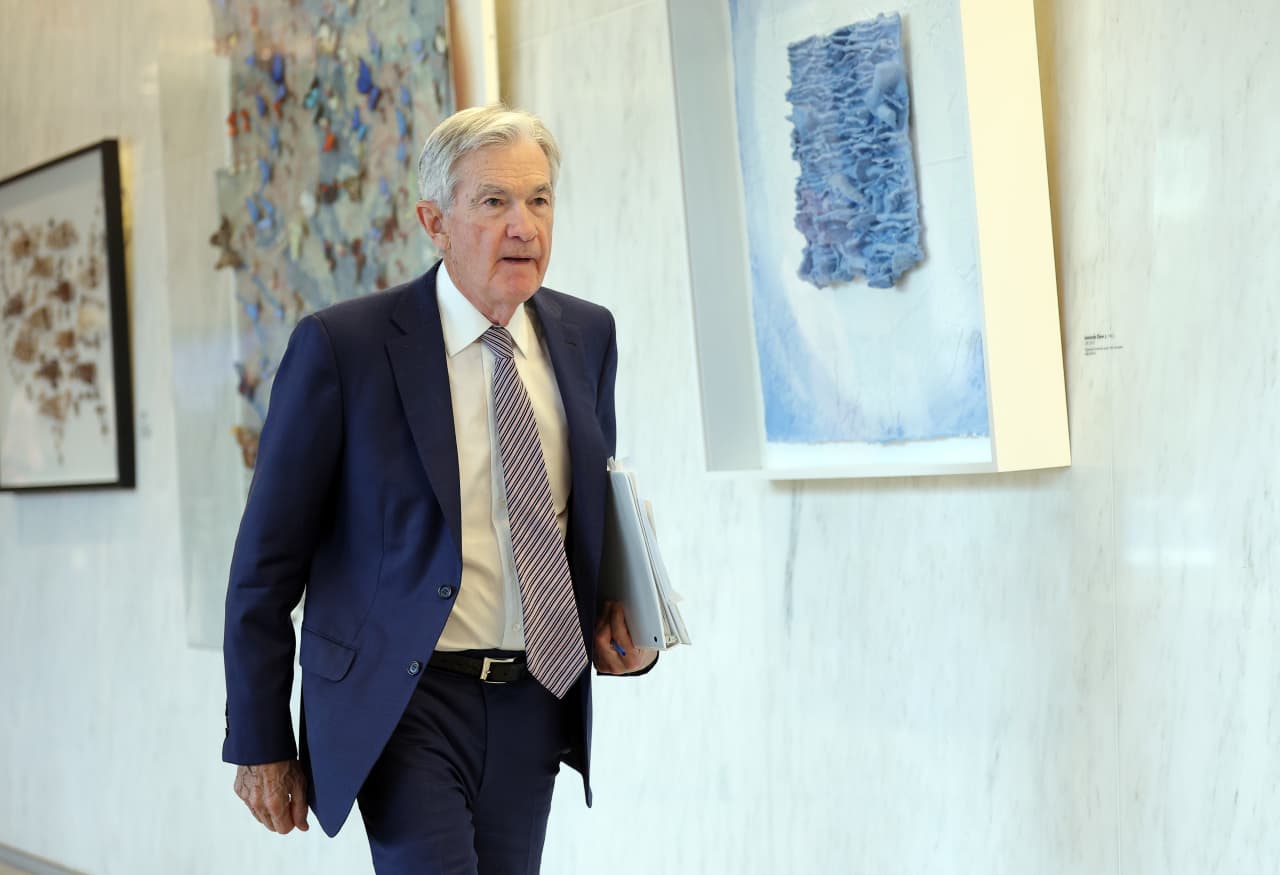
Fed Chair Powell struck a deliberately ambiguous tone, saying risks to the economy suggest rates "could go lower or higher" — hardly the clarity markets were hoping for. He emphasized the Fed isn't facing an imminent decision because "we don't know what the economic effects" of the Iran war will be. Translation: the Fed is flying as blind as the rest of us.
Multiple Fed officials signaled that the rate-cutting cycle may be over, adding another layer of uncertainty for equity bulls who had been banking on easing. The OECD now projects the U.S. will have the worst inflation among G7 countries in 2026, a stark reversal from the "inflation defeated" narrative. Investors are eyeing March employment data as inflation pressures show tentative signs of cooling, but the war-driven oil spike threatens to reignite price pressures — setting up a potential collision between the Trump administration and the Fed that could dwarf their current tensions.
Iran's own inflation rate has surged to 50.6%, underscoring the broader destabilizing economic effects of the conflict across the region.
Hot Sectors
Semiconductors remain a consensus long-term conviction play tied to AI infrastructure buildout, though near-term sentiment is fragile. The intersection of AI datacenters, hydrocarbon demand, and private credit is emerging as an investable theme, with rising electricity rates in datacenter-heavy regions creating opportunities across the energy value chain.
Healthcare and pharma are the clear sector story this week. The GLP-1 obesity drug race is intensifying: Eli Lilly (LLY), down ~19% from its 52-week high after becoming the first healthcare stock to hit a $1 trillion valuation in late 2025, is drawing buy-the-dip calls from analysts. Novo Nordisk (NVO) has fared far worse, down over 50% in the past 12 months and trading near its 5-year low. Viking Therapeutics (VKING) is positioned as a potential dark horse later this year as the anti-obesity pipeline gets crowded.
Western oil stocks are getting a second wind as investors connect the dots between Trump's Iran strategy and sustained elevated crude prices — a trade that has legs as long as the conflict persists.
Stock News
Eli Lilly (LLY) dominates the conversation this week. Mounjaro and Zepbound sales rose 99% and 175% respectively in 2025, but the stock's 19% pullback from highs has analysts debating whether it's a buying opportunity or a sign the GLP-1 trade is getting crowded. Analysts still see significant upside.
Pfizer (PFE) is doing something it hasn't done since 2022 — though the stock has declined 25% over five years while the S&P 500 climbed 68%, its 4%+ dividend yield and post-COVID pipeline reset are attracting income-focused buyers. Bristol Myers Squibb (BMY) is drawing similar dividend-hunter interest with its 4.4% yield.
CRISPR Therapeutics (CRSP) has significantly lagged the broader market over five years despite winning approval for Casgevy, its first commercialized gene-editing medicine — a reminder that groundbreaking science doesn't always translate to groundbreaking returns on schedule.
Market Analysis
The dominant narrative is clear: the Iran war is no longer a background risk — it's the central macro variable. Consumers face a "triple stack of pain" from conflict-driven oil spikes layered on top of trade war costs and persistent inflation. The question isn't whether this hurts growth, but how much and how fast.
What to watch this week: March employment data drops and could be the next catalyst in either direction. If the labor market shows cracks while inflation stays hot, the Fed's "wait and see" posture becomes untenable, and the stagflation trade gains momentum. Keep an eye on oil — every sustained $10/barrel move higher adds roughly 0.3-0.4% to headline CPI within a few months.
The Roth 401(k) RMD elimination is a quieter but significant development for retirement planning — if you're not factoring it into your long-term strategy, you should be. And for those asking whether to liquidate into recession fears or hold: history says the S&P 500 has recovered from every prior drawdown, but timing and time horizon matter enormously. The retail investor sentiment on Reddit skews toward caution, with many holding pat rather than buying aggressively — a contrarian signal worth noting.