Oil Blows Past $100 as Iran War Chokes Global Supply — Stagflation Fears Grip Wall Street
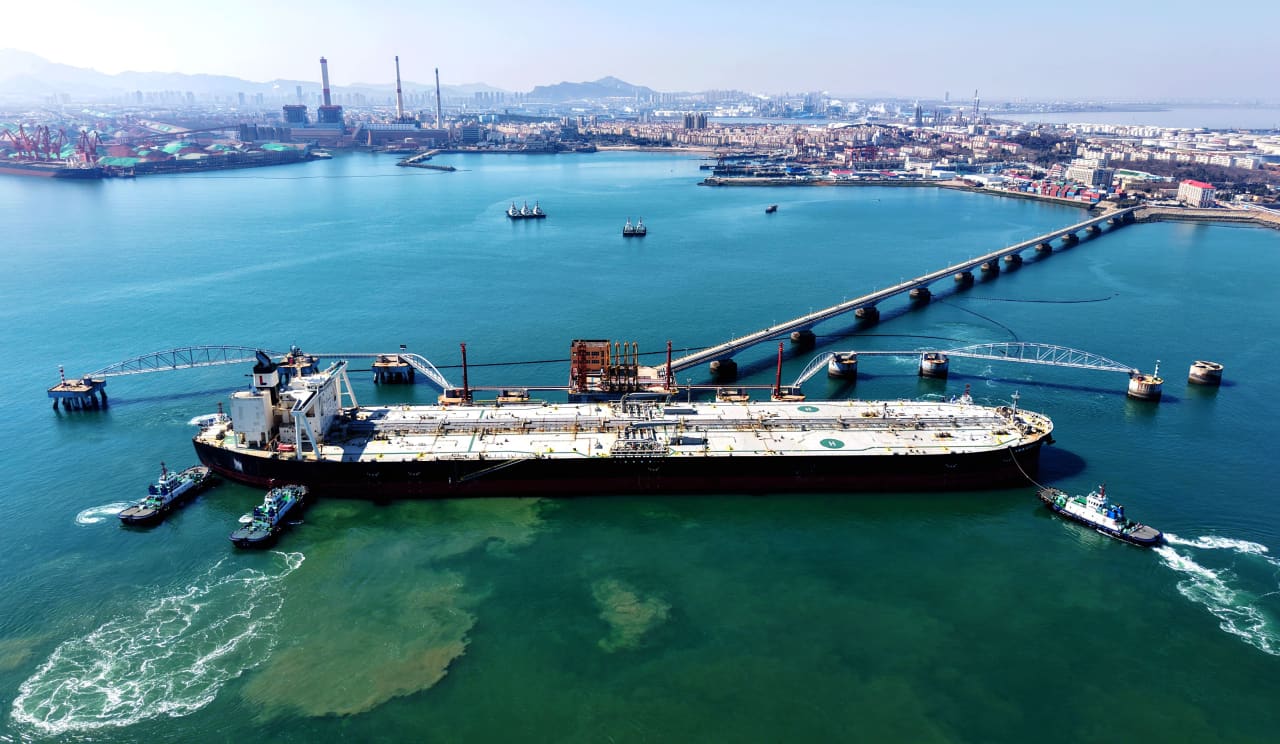
Oil dominated the weekend narrative as Brent crude surged above $105 and WTI broke $100, driven by escalating conflict with Iran that has choked tanker traffic through the Strait of Hormuz. Oil prices have now skyrock...
Markets Overview
Oil dominated the weekend narrative as Brent crude surged above $105 and WTI broke $100, driven by escalating conflict with Iran that has choked tanker traffic through the Strait of Hormuz. Oil prices have now skyrocketed 66% since the Iran war began, and the S&P 500 (^GSPC) is down more than 3% year-to-date despite most companies beating Q4 earnings estimates. Ed Yardeni raised his market meltdown odds to 35% from 20%, while Polymarket shows a 37% probability of U.S. recession — a sharp repricing of risk in just days.
Wall Street veteran commentary was blunt: spiking oil prices "basically end any chance of a market melt-up," with the prospect of stagflation potentially dragging stocks into bear market territory. Despite the headwinds, some analysts point to underlying market resilience, noting that equities have held up better than expected given the combination of poor employment figures and geopolitical chaos. All eyes turn to Monday's open, where the weekend oil spike alone could set the tone for the entire week.
Earnings Reports
The Trade Desk (TTD) used its Q4 report to signal a strategic pivot, moving beyond its precision-growth-machine reputation. The market is watching whether the reinvention translates to sustained revenue acceleration or just a narrative shift. 3D Systems posted Q4 revenue up 16% quarter-over-quarter, beating its own guidance and issuing Q1 revenue guidance above Street forecasts — a rare bright spot in the additive manufacturing space. Global Business Travel Group reported GAAP EPS of $0.22, beating estimates by $0.18 on revenue of $792M that came in-line.
Bristol Myers Squibb (BMY) crushed it in February on a string of positive news flow, while Mueller Industries (MLI) shed more than 13% last month on broader industrial weakness. Teradyne (TER) rallied sharply after its February earnings report topped estimates, riding momentum in its robotics business.
Fed & Economic Data
The Fed finds itself "utterly paralyzed" as the Iran conflict stokes stagflation fears — rising energy costs threaten to push inflation higher while simultaneously crushing growth. Fed officials are actively monitoring the war's inflation impact, but the policy toolkit is limited: interest rates control demand, not supply shocks. If oil triples because of a Middle East war, hiking rates doesn't produce more oil — it just deepens the economic pain.
A provocative analysis circulating on retail forums projects $6/gallon gasoline based on oil futures curves and historical pump-price correlations. While that figure sits at the extreme end, the directional pressure is clear. The next inflation prints will be critical — if energy pass-through shows up faster than expected, the already-slim odds of near-term rate cuts evaporate entirely. Polymarket's 37% recession probability tells you the market is no longer treating this as a tail risk.
Hot Sectors
Energy is the undisputed leader. Iraq's oil output has plunged roughly 60% as the Iran war blocks tanker routes through the Strait of Hormuz, and the supply disruption extends beyond crude — one-third of global fertilizer shipments transit the same chokepoint. CF Industries and Petrobras (PBR.A) are being flagged as direct beneficiaries, with PBR.A positioned as an oil major operating outside the conflict zone.
Telecom quietly posted a strong start to 2026, with several S&P 500 communications names still trading at low P/E multiples with attractive, cash-flow-supported dividend yields. Transport stocks are getting quietly crushed by rising fuel costs — a sector to watch as the energy squeeze plays out. AI infrastructure names like CoreWeave and Nebius face growing investor anxiety over massive capex requirements, while a fresh fund manager survey stoked AI bubble fears as influential investors appear to be souring on the trade simultaneously. Palantir (PLTR) has dropped 30% from its 52-week high near $200.
Stock News
Zim Integrated Shipping (ZIM) soared nearly 31% in February on a buyout offer from a deep-pocketed peer — a direct beneficiary of shipping disruption repricing. Berkshire Hathaway (BRK.B) draws fresh buy interest as its massive cash pile and defensive positioning look increasingly attractive in a stagflationary environment. SpaceX is reportedly targeting a June IPO, with Starlink's growing subscriber base as the headline asset.
First Brands, the bankrupt car parts maker, is staring down brutal recovery rates — asset sales expected to yield less than $200M against a $12B debt pile, leaving creditors nursing heavy losses. Schwab U.S. Dividend Equity ETF (SCHD) has gone from category laggard to top 1% performer, rewarding investors who held through three rough years. Bitcoin's odds of hitting $150,000 by June sit at just 5% on prediction markets, reflecting broader risk-off sentiment.
Market Analysis
The week ahead is all about oil. Monday's open will price in the weekend's $100+ crude move, and the cascading effects — from gas prices to transport costs to fertilizer — will ripple through earnings expectations for weeks. The key question: is this a temporary spike or the beginning of a sustained supply crisis? The Strait of Hormuz bottleneck suggests the latter until the geopolitical situation changes.
Watch for: Fed speaker commentary on the oil shock (any hint of emergency action or explicit inaction will move markets), Monday's equity open and VIX reaction, energy sector earnings revisions, and whether the JPMorgan-Bessent dispute over Hormuz transit insurance signals a policy gap that could prolong shipping disruptions. The stagflation trade — long commodities, short duration, underweight growth — is now consensus. When everyone is positioned the same way, the next surprise comes from the direction no one expects.