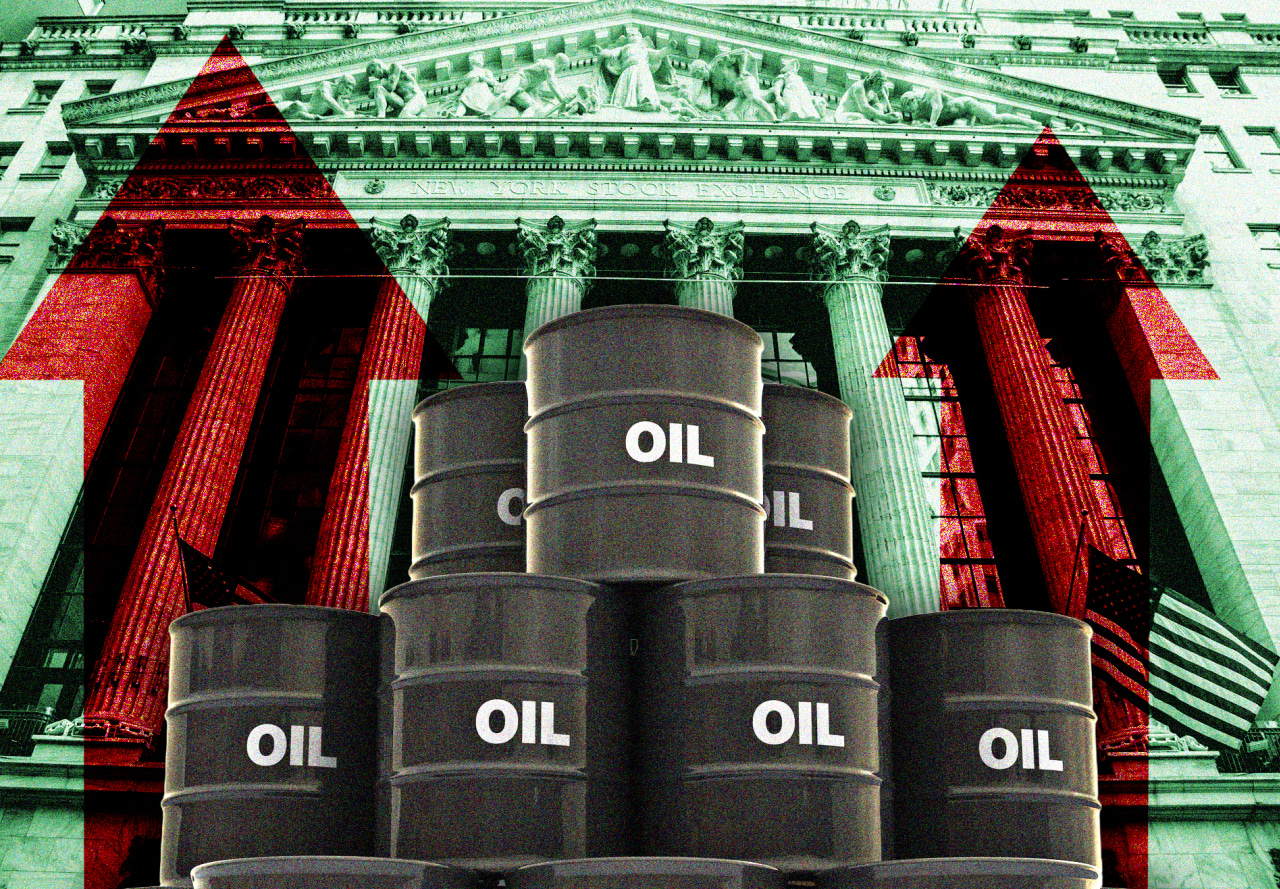
Oil Rockets Past $110 as Middle East Conflict Chokes Global Supply Lines
The Middle East conflict between the U.S.-Israel coalition and Iran is the dominant force across asset classes, dragging equities lower and sending commodities surging. The S&P 500 is down 1.3% since the initial strik...
Markets Overview
The Middle East conflict between the U.S.-Israel coalition and Iran is the dominant force across asset classes, dragging equities lower and sending commodities surging. The S&P 500 is down 1.3% since the initial strikes on Iran, with deeper intraday drawdowns along the way. Oil has blown past $110 as the conflict disrupts shipping through the Strait of Hormuz, a chokepoint for roughly 20% of global crude flows. Risk-off sentiment is broad-based, though energy names are outperforming as the war premium gets priced in. Futures pointed lower heading into the weekend as traders brace for potential escalation.
Fed & Economic Data
The labor market is showing signs of cooling but not cracking. December payrolls came in at just 50,000 — slightly below consensus of 55,000 — while October and November were revised down a combined 76,000 jobs. The unemployment rate ticked to 4.4%. Weekly initial claims rose to 208,000, up 8,000 from the prior week's revised level, still historically low but trending in the wrong direction.
Housing continues to soften under the weight of elevated mortgage rates. Housing starts fell 4.6% to a 1.246 million annualized rate in October. Mortgage applications dropped 9.7% over a two-week period, per the MBA. The "Home ATM" is mostly closed — cash-out refinancing has dried up as homeowners sit on low-rate mortgages with little incentive to tap equity at current rates.
On the brighter side, household net worth surged $6.1 trillion in Q3 to $181.6 trillion, per the Fed's Flow of Funds report, driven largely by equity and real estate gains. Wholesale used car prices ticked up modestly, with the Manheim Index rising to 205.5, up 0.4% year-over-year in December.
Heavy truck sales collapsed in Q4, plunging 32.5% year-over-year in December to a 311,000 SAAR — a sharp deceleration that signals weakening freight demand and potential broader industrial softness.
Hot Sectors
Energy is the clear leader as oil's spike past $110 lifts the entire complex. Iraq's oil output has plunged roughly 60% as the Iran war blocks tanker traffic through the Strait of Hormuz, tightening an already nervous supply picture. Energy stocks are the rare pocket of green in an otherwise defensive tape.
Cybersecurity is drawing renewed attention as geopolitical risk elevates — analysts are flagging the sector as a potential beneficiary of increased defense and enterprise spending.
AI infrastructure remains in focus but sentiment is getting choppy. Applied Digital (APLD) is under pressure after losing Nvidia (NVDA) as a shareholder, raising questions about the durability of its data center buildout thesis. Nvidia itself continues to attract institutional flows, with smart money reportedly adding in March despite broader market weakness.
Travel and leisure are taking hits from the conflict. Hotel occupancy showed some improvement early in 2026 — up 4.4% year-over-year in the first week of January — but the geopolitical overhang is weighing on forward bookings and airline-adjacent names.
Earnings Reports
Earnings season is winding into a new wave. Monday's pre-market slate includes reports from Coherus BioSciences (CHRS), Vail Resorts (MTN), Zevra Therapeutics (ZVRA), and FreightCar America (RAIL) — all previewed ahead of the open.
Lemonade (LMND) cratered 40.3% in February after posting Q4 results that spooked investors. The insurtech disruptor continues to struggle with profitability as it tries to scale against entrenched legacy carriers.
Stock News
Chinese dividend stocks are seeing inflows as mainland investors, starved of attractive options in a sluggish domestic market, rotate into yield-generating names. The WSJ reports the trend is accelerating as growth opportunities remain scarce.
Strategy (formerly MicroStrategy) is being evaluated as a potential market-beater, with its leveraged Bitcoin thesis drawing both bulls and skeptics as crypto volatility persists.
Oracle (ORCL) is being positioned by some analysts as a long-term AI infrastructure winner, riding its cloud database and enterprise AI integration story.
Market Analysis
The market is navigating a three-front war: geopolitical risk from the Middle East, a cooling labor market, and persistent rate uncertainty. Oil above $110 is a stagflationary signal — it pressures consumer spending while complicating the Fed's path to cuts. The 50K jobs print and downward revisions suggest the labor market is losing momentum, but not fast enough for the Fed to panic.
This week to watch: December CPI drops and will be the single most important data point — any upside surprise with oil already surging could slam the door on near-term rate cuts. Existing home sales, retail sales, and industrial production round out a packed calendar. New home sales data for September and October will also be released. With crude ripping and jobs cooling, the macro picture is getting murkier. Expect volatility to stay elevated as the Middle East situation remains fluid.